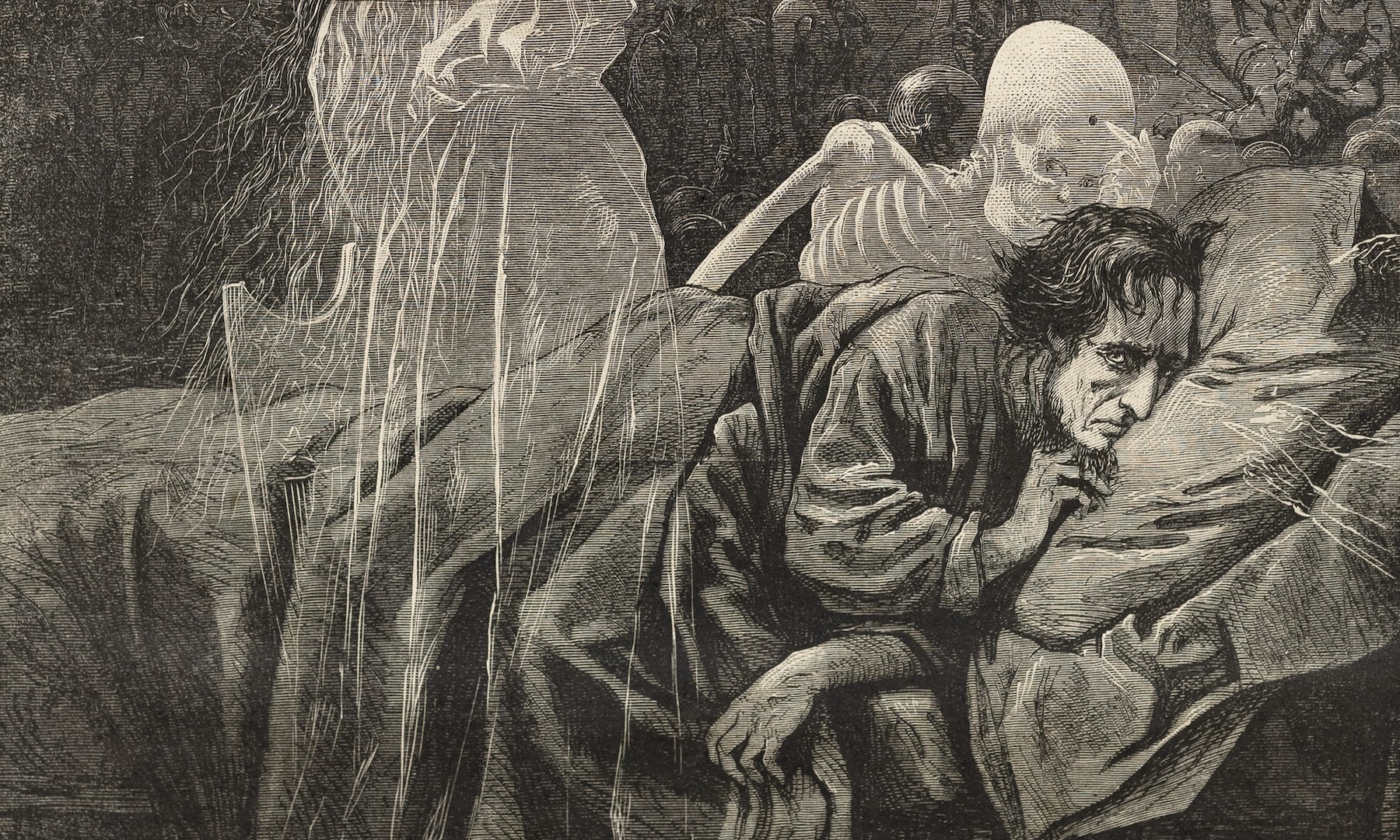
It’s easy to feel far removed from the Civil War era, but for students in the University of Georgia’s HIST 4760/6760 Hands-on Public History course, that is not the case. Students work with community partners to develop public history projects based on primary and secondary sources. This spring semester, the class partnered with the Georgia Museum of Art to curate “Seeing the News in Harper’s Weekly, 1860 – 80” an exhibition featuring illustrations from Harper’s Weekly that focus on the Civil War and its aftermath. The exhibition will be on view in the museum’s Study Gallery May 23 – July 12.
Akela Reason, history professor and director of the museum studies certificate program at UGA, taught the course. To choose a topic for the exhibition, she partnered with Tricia Miller, deputy director of collections and exhibitions and head registrar at the museum, who taught HIST 4765 Museum Registration Methods this past spring. Reason’s students selected the prints and wrote accompanying labels, while Miller’s students created condition reports for each work. Erin Ideker, an exhibition design intern at the museum, determined how the works were displayed.
“Even in the standard history class, where sometimes primary source text will be used, it’s usually printed in a book as a reader, and not the original thing as it was experienced by someone in the time period,” said Reason. “In this particular instance, students got to work with the actual materials, which is not a common practice.”
The exhibition focuses on two main artists, Thomas Nast and Winslow Homer, who both illustrated for Harper’s Weekly. Nast was one of the most popular cartoonists of his time, best known for establishing the donkey and elephant as symbols for the Democratic and Republican Parties. Homer was a well-known painter whose Civil War illustrations became iconic images of the period. Nast’s and Homer’s illustrations cover political issues such as Reconstruction, post-war civil rights, segregation and dealing with ex-Confederates. Although Harper’s began as a nonpartisan news source, it became staunchly pro-Union during the war, and continued supporting the Republican Party in the years that followed.
“Harper’s is fascinating in part because it was so widely accessible,” said Reason. The magazine was affordable and widely read by middle-class Americans. Harper’s was a crucial news source during the Civil War era, particularly because daily newspapers could rarely publish images due to time constraints.
Reason explained, “If you wanted to see an image, you had to get one of the illustrated weeklies. Because they had a longer lead time, they were able to get imagery out to the public on a relatively speedy basis.” There was a high demand for seeing the news illustrated, a fact supported by the secondhand readership of Harper’s. It’s estimated that a single copy of the magazine could often pass between five and 10 people.
“Seeing the News in Harper’s Weekly” will display the printed illustrations as well as a complete edition of Harper’s Weekly, all from the museum’s collection. Wood blocks that were used to stamp illustrations into the magazines were also be on view, courtesy of UGA’s Special Collections Libraries. Student curators wanted visitors to be able to imagine how Harper’s was consumed back in the day. To re-create the experience, the class is including a facsimile copy of a single issue in its entirety, which visitors will be able to pick up and read.
Alexis Gorby, associate curator of academic and campus engagement, provided support and information about the museum’s collection throughout the project. “Students are learning all of these important writing skills and curation skills, and then it’s great for the museum because Harper’s Weekly does not often go on view,” she said. Student-curated exhibitions present original and interdisciplinary ways to view works, in this case through a historical lens.
Authored by:
Jisu Stanfield