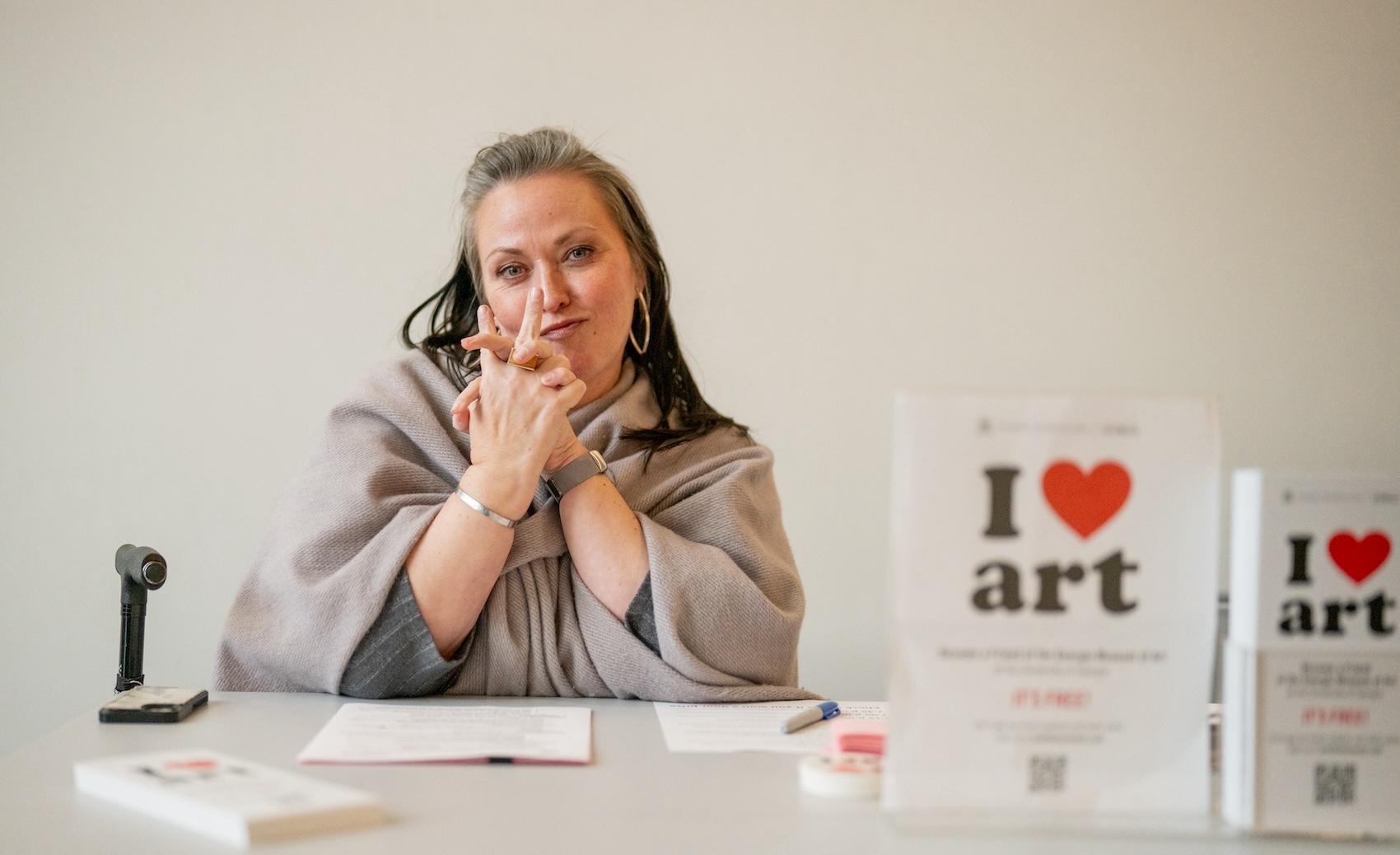
Behind every museum is a network of donors, volunteers and advocates who believe the work matters. Michele Turner has spent her career at the Georgia Museum of Art cultivating that network and has helped transform the way the museum thinks about giving.
Turner began working at the museum in 2000 as an event coordinator and left for a position at the Georgia Center in 2008. She eventually made her way back and has served as the museum’s director of annual giving and donor relations for the last nine years.
As the primary liaison to the UGA Foundation on matters of membership and annual giving, Turner held a unique role in balancing the priorities of the museum and the University of Georgia alongside those of donors and volunteers. She also served as the logistical liaison for the museum’s Director’s Leadership Council and Friends Advisory Council. As the person in charge of all major fundraising events and campaigns, Turner has drawn on her background in event and wedding planning. She cites “attention to detail, working to engage volunteers and event committee members, multi-tasking and anticipating problems or challenges in advance” as the main skills that allowed her to excel in this role.
Beyond those proficiencies, her overarching approach to cultivating relationships with donors is understanding their goals and priorities. “Relationship building is always about the curiosity of learning what compels people to give or support any project,” she says. “Donors’ passions drive their giving, whether it’s their time or financial support.” With that in mind, Turner made it a priority to clearly communicate to donors how their gifts make an impact and recognize that impact appropriately. Turner is most proud of being a main figure in the transition from a membership giving model to an annual one. This long-term effort has allowed the museum to be better integrated with UGA’s central development goals.
Her biggest takeaway from the museum is the importance of donor engagement. “If you are not willing to engage, cultivate and steward your supporters, it is impossible to truly be successful in development,” she says.
Turner began a new role on June 1 as the director of annual giving for UGA’s Division of Public Service and Outreach. This new role comes with a considerable shift in scale, with Turner now fundraising for eight units. Yet, despite the differences between those units, they hold some resemblance to the museum in that they all “have an external facing statewide mission that correlates with the university’s mission.” She is more than ready to take on this new challenge. “I feel like it’s the best of both worlds. It allows you to work with donors that are committed to the university because of affiliation (as students, alumni, faculty/staff and friends) but also to look beyond and work with people who recognize UGA’s impact at local, regional and statewide levels.”
Turner’s advice for those interested in this work is simple: jump in. “Most institutions are understaffed in their development departments, and they rely heavily on volunteers, interns and students,” she says. “It’s a great way to [gain] practical skills.” She also emphasizes finding a mentor. “Watch how they interact with donors, manage conflict and handle stress,” she says. “Use those take-aways to not only make sure this is the type of work you want to do, but also so that you can learn to model the best parts of those skill sets.” For Turner, intentional observation and hands-on learning has shaped her to become an effective senior development professional, a foundation that has led her to this new opportunity.
Authored by:
Paige Carter