As we celebrate the 75th anniversary of our museum, it’s an opportune time to look back at our history. Since the beginning of the year, we’ve been featuring a post once a month about the history of the museum through the decades. This month, we take a look at the museum’s presence and history on campus in the 2000s.
The move to a state-of-the-art building on East Campus in 1996 helped usher in the new millennium for the Georgia Museum of Art. The new 52,000-square-foot building meant that the museum could host more exhibitions of all kinds and they did just that. From January 2000 to November 2008, the museum’s records show that there were approximately 264 exhibitions on view during the decade, showcasing a variety of works and artists including:
- “Romantics and Revolutionaries: Regency Portraits from the National Portrait Gallery, London”
- “After Many Years: The Paintings of Wilmer Wallace and Lamar Dodd”
- “Bold Improvisation: 120 Years of African-American Quilts from the Collection of Scott Heffley”
- “The Xerces Society, Installment VI: Sir Samuel Cropia’s Public Laboratory”
- “Paintings by Andy Warhol from the Weisman Collection”
- “American Quilts from the Collection”
- “Graphica Mexicana”
- “Weaving His Art on Golden Looms: Paintings and Drawings by Art Rosenbaum”
- “Modern Threads: Fashion and Art by Mariska Karasz”
- “Spanish Works on Paper”
- “Amazing Grace: Self-Taught Artists from the Mullis Collection”
Even when the new location opened, there were already plans to increase the size of the facility to meet the demands of the museum’s mission. With its impressive hosting of exhibitions, plans for an expansion were well received and supported by many. Given that the institution was tasked with serving the needs of the University of Georgia as well as the citizens of Georgia as the designated state art museum, the museum’s new home helped it further fulfill its mission to foster learning, research and service through art. With more space for exhibitions, storage and staff, the museum was able to host more ambitious exhibitions, grow its focus on scholarship and professional practices and fund outreach programs that are still a mainstay today.
Of particular note in the 2000s were initiatives such as:
Henry D. Green Center for the Study of the Decorative Arts
- In 2000, the Henry D. Green Center for the Study of the Decorative Arts was established, with an accompanying symposium every other year on the decorative arts that was first held in 2002. Decorative arts, as a field, examines history through items from the time including furniture, textiles, ceramics and the like. The decorative arts continue to flourish at the museum, with staff currently preparing for the next symposium in 2024.
- As noted on our own website, the Green Center’s emphasis on American decorative arts, specifically those made in or of significance to Georgia, joined with the goals of the department of American art in recent years and are apparent in today’s galleries. Just as connoisseurs initially favored European paintings over works of art by Americans, the same held true with decorative arts. The collecting and scholarship of the museum show a series of efforts to correct these prejudices. The Green Center also includes the Green Library, which greatly expanded the museum’s library of art books and has served as a model for the archival aspects of the other centers.
- In 2009, the museum received a grant from the National Endowment for the Arts to facilitate a curator of decorative arts at the museum.
- In 2002, Martha Randolph Daura donated $6.3 million to the Georgia Museum of Art in honor of her late father, the renowned modernist artist Pierre Daura. The donation established the Pierre Daura Center at the museum, which includes the artist’s archive and more than 600 works of art. The Pierre Daura Study Center organizes exhibitions and promotes research of Daura’s work. Its archive contains correspondence, diaries, exhibition catalogs, newspaper articles, photographs and ephemera. The donation also endowed the Pierre Daura Curator of European Art, the first endowed position at the museum.
Fifth Grade Tour Program for Clarke County School District
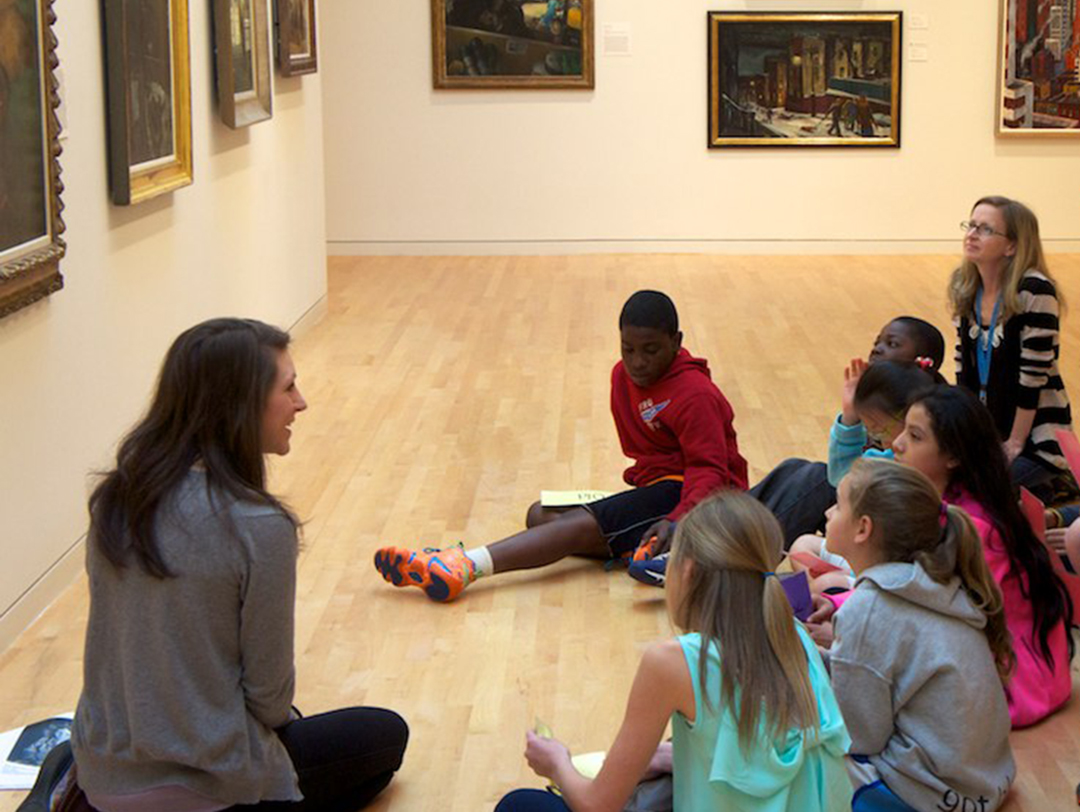
- In 2005, the museum established a yearly tour program for Clarke County School District 5th-grade students. The initiative later served as a model for Experience UGA, a partnership that aims to bring Clarke County students in all grades to the UGA campus every year to experience learning, explore college options and interact with UGA students. The 5th-grade tour program at the museum was initiated thanks to a generous sponsorship by Buddy and Lucy Allen.
While the museum’s new home on East Campus opened 1996, the Lamar Dodd School of Art’s new home in the Performing and Visual Arts Complex was still a work in progress. Construction for the new art school facility was completed and opened in fall of 2008. The new Lamar Dodd School of Art brought together 10 of the art school’s 14 departments under one roof and helped make it feel more cohesive as a creative community on campus.
The museum’s expansion plans began only a few months later, breaking ground in early 2009, with museum galleries closed to the public beginning in November 2008. How did the museum continue to serve the UGA campus and state of Georgia during its renovation? The internet was a big part of filling the physical void. The museum launched virtual galleries and tours via Second Life that gave patrons a unique experience with the museum’s permanent collection. The Athens art community also stepped in to help the museum, hosting exhibitions and events at other venues around town. A Georgia Museum of Art exhibition called “Lord Love You” focusing on the work of Georgia folk artist R.A. Miller, for instance, was hosted by the Lyndon House Arts Center, and the Lamar Dodd School of Art hosted MFA exit shows that had traditionally been at the museum.
When the museum reopened to the public in January 2011, its renovations boasted additional gallery space to showcase more of the permanent collection (over 8,000 works at the time), the addition of the outdoor Jane and Harry Willson Sculpture Garden, the new Study Centers in the Humanities and an education wing. Today, that gallery space continues to serve the museum well, with significant room to showcase the museum’s vast permanent collection, host visiting exhibitions and facilitate educational outreach and programming of all kinds. The museum’s scholarship initiatives continue to thrive and student education and outreach to the public are a big part of what the museum strives for each day. While longtime director William U. Eiland departed earlier this year, after more than 30 years at the museum, the museum’s new director David Odo took the helm this summer and is poised to make his own mark on the museum’s history and impact as an institution for the UGA campus and the state of Georgia. Stay tuned for what the next decade will bring at the Georgia Museum of Art.
Authored by:
Jessica Luton