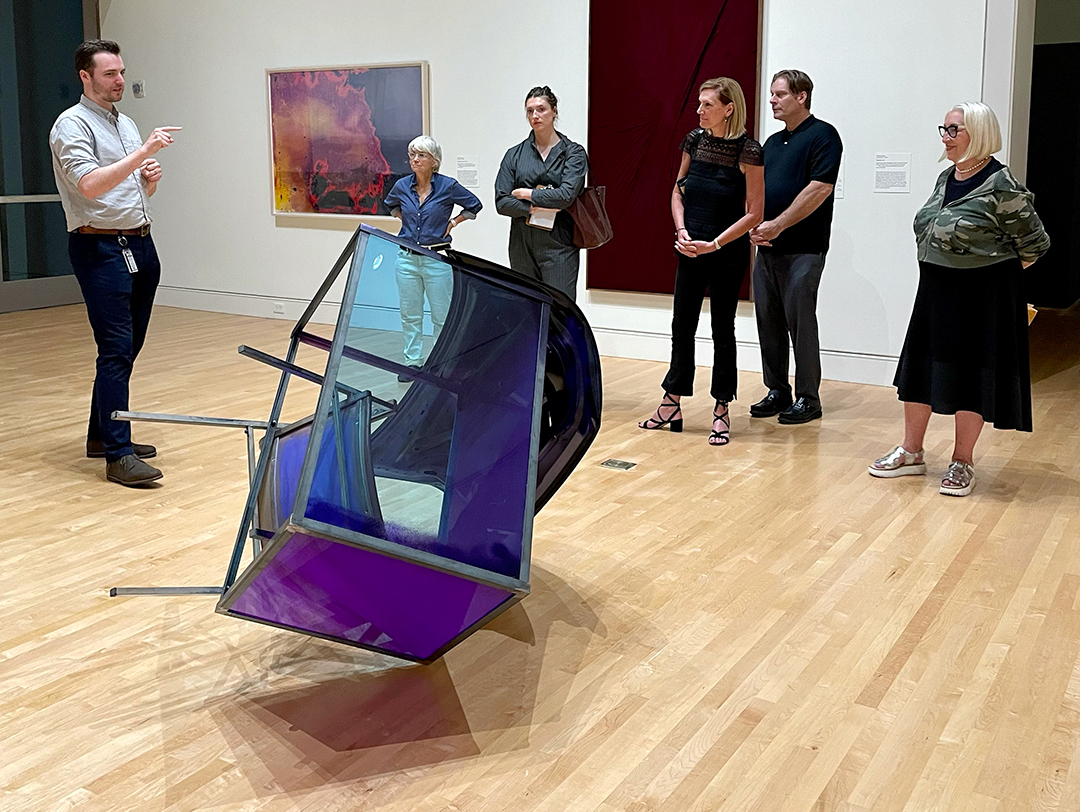
The following is a portion of an interview about the exhibition “Neo-Abstraction: Celebrating a Gift of Contemporary Art from John and Sara Shlesinger”(opens in new tab) with its curator. Jeffrey Richmond-Moll is the curator of American art at the Georgia Museum of Art, where the exhibition is on view through Sunday, December 5. The exhibition was prompted by the Shlesingers’ donation of 110 works of global contemporary art from their collection to the museum at the end of 2019.
James O’Neill: How did you feel when they [John and Sara Shlesinger] donated that much work?
Jeffrey Richmond-Moll: It was a really exciting opportunity for me to see the permanent collection suddenly transformed to include contemporary art, which we had not really been collecting as an institution. With the gift, we were now very much active and well represented with 21st-century art and in a way that could not have happened without the generosity of donors like the Shlesingers. So, it was both an exciting opportunity for me to grow in my knowledge and familiarity with a number of these artists, but also to see what we can do as a museum to engage with contemporary art and contemporary artists through our exhibitions and publications and also our teaching and university level engagement.
JO: What was it like preparing for the exhibition and what was the process for you as the curator?
JRM: Preparing for the exhibition was certainly not without its challenges because with the donation coming in December of 2019, we had planned to show the collection for the first time in summer of 2020, and then with the pandemic and needing to shut down the museum in March of 2020, it meant that our initial plans for the show were quickly interrupted. But that gave me more time to become better acquainted with the Shlesinger collection and create a more refined vision for what this first show celebrating the donation could be. It opened a year late, but I think it opened even stronger because of that time. In terms of how the exhibition came to be, we were looking for a way to find various themes within the 110 objects that came in through the gift. The idea of neo-abstraction allowed us to look across lots of different media like painting, photography, mixed media and assemblage sculpture and really think broadly across the full collection.
JO: So, you took the abstraction theme and kind of ran with it and that’s how you picked the works that would be exhibited?
JRM: Yeah, well sort of, a little bit of a chicken or the egg question. When I work, I like the objects to drive the argument. It was a matter of looking across the collection, looking at all of the objects and thinking, “OK, what connections can I make between them?” And as you start to see certain ideas come to the surface, then it allows you to move back and forth between a theme and the objects that justify the theme. So, I can’t really say that one came before the other, because it’s sort of a process of discovery that’s very organic. But I like to think that the objects are what will always be the point of departure and also where you keep returning to build up a project or a thesis. Ultimately, I can write anything I want on the labels, but if I’m not able to tell a visual story in an exhibition to a visitor, then it’s ultimately not successful.
JO: What was your goal in making this collection of work available to the public?
JRM: Just getting them out there and making them available in general is an important goal and then finding ways to spark those connections within the collection for the visitors, and to allow us at the museum to spark connections on campus and in the community with other people who are passionate about contemporary art and who are themselves artists. I think we’re engaging a new community of visitors at the museum with this collection, creating relationships with a sort of network in Athens that has already been devoted to contemporary art. It’s really the beginning of a longer process of network building and relationship building that the collection allows us to do.