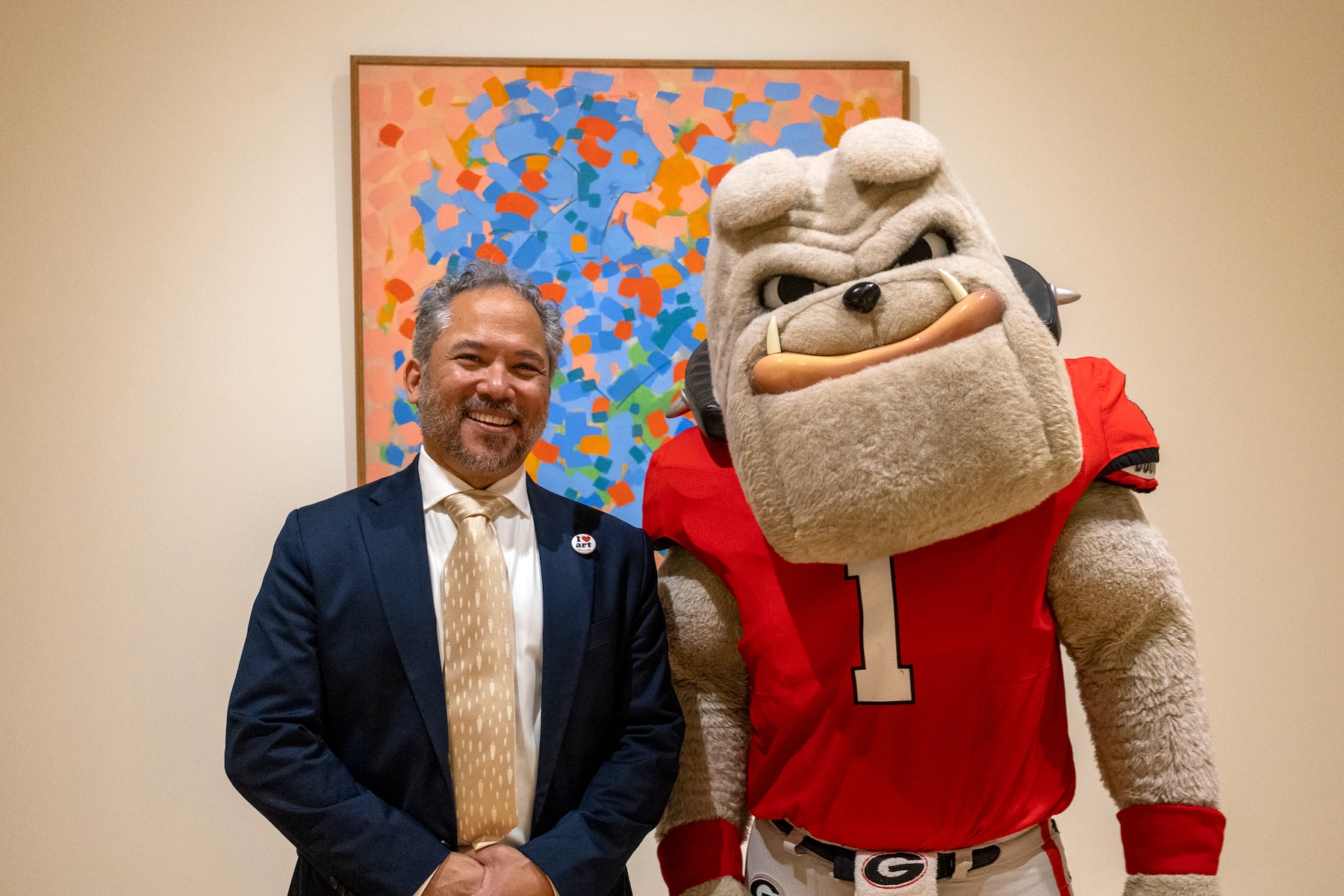
Following a distinguished career in museum leadership and years of dedication to the Georgia Museum of Art, David Odo has accepted a new role as director and CEO of the Honolulu Museum of Art. His last day at the Georgia Museum of Art will be July 17, and he will begin his new position in September. Odo came to the Georgia Museum of Art in 2023 from Harvard Art Museums, where he was director of academic and public programs, division head and research curator. There, he conducted initiatives that connected departments and schools across the university with the museums. His time as director and chief curator at the Georgia Museum of Art has been no different — filled with hard work, progress and outreach.
As he prepares to lead the Honolulu Museum of Art, we spoke with Odo about his time leading the Georgia Museum of Art, what excites him about the Honolulu Museum’s future and how he hopes to connect its collections with communities across the islands.
Q: What role has Hawaii played in your life, both personally and professionally?
A: Hawai‘i is home — I grew up there, though I’ve lived away for many years pursuing my career. Coming back to lead the Honolulu Museum of Art feels like a real homecoming, and I’m looking forward to reconnecting with the place and the people who shaped me.
Q: What are you most proud of from your time at the Georgia Museum of Art?
A: If I had to point to one thing, it would be our work deepening student engagement with the museum. My goal when I arrived was to ensure that University of Georgia students weren’t just occasional visitors but rather, active participants in the life of the museum. Over the past three years, we more than doubled student curricular engagement and grew the number of academic departments and disciplines using the museum as a teaching resource by more than 140 percent. Thanks to the generosity of our supporters, all our student internships are now paid positions, we have hired a dedicated academic engagement curator, we established a curricular gallery and we created paid student guide and student teacher programs, which train students from across the university to research original works of art for teaching and public tours.
Q: Do you have a favorite exhibition during your time at the Georgia Museum of Art?
A: Honestly, it’s impossible to pick just one. I’m incredibly proud of all the work our team has accomplished across so many exhibitions over the years. If I had to point to a favorite moment in an exhibition, though, it would be running into a colleague in our spring exhibition, “We, Too, Are Made of Wonders,” who excitedly exclaimed that she “couldn’t believe” that the works of art in the show were in the museum’s permanent collection. I loved that because the Georgia Museum can be such a surprise. The quality of the collection is incredible, and the team does an amazing job researching, curating, designing, installing and teaching with our exhibitions.
Q: What will you miss most about living in Athens?
A: What I’ll miss most is the friendliness of the people here. Athens has this wonderful quality of feeling like a big small town — there’s an easy, chill vibe, but also an endless amount to do and discover, thanks to the university, the arts scene and the community around it. I’ve been lucky to be surrounded by fantastic people, and that’s the hardest thing to leave behind. Though I take some comfort in knowing that warmth and friendliness is something Athens and Hawai’i have in common.
Q: What are you most looking forward to at the Honolulu Museum of Art?
A: I’m especially looking forward to thinking together with the HoMA team about how we can center the arts of Hawai’i in our work going forward. There’s a wealth of contemporary and historical art from the Islands that remains underappreciated both at home and away, and I’m excited to help change that. Going home to do this work feels especially meaningful because it’s a chance to bring everything I’ve learned about research, learning and community-centered museum practice back to the place that shaped me, and to help the rest of the world see what I’ve always known: that Hawai’i’s artistic traditions and contemporary art practices deserve far more recognition than they’ve received.
Authored by:
Tatum Ozment