Since spring 2025, the Dorothy Alexander Roush Gallery has hosted the Georgia Museum of Art’s study gallery program, where faculty at the University of Georgia can request pieces to be shown throughout the semester as a teaching aid for their courses. Three professors have curated pieces for both their students and visitors of the museum to enjoy this fall semester, on view July 25 – December 6.
Art history professor Nell Andrew chose a selection of late-19th-century prints from the French periodical “L’Estampe originale” for her course ARHI 4510: Modern Art in Europe 1886–1918. These prints highlight the rapidly evolving environment in which these artists were immersed in and how they interpreted these “physical, technological and psychic shifts” into their own artwork.
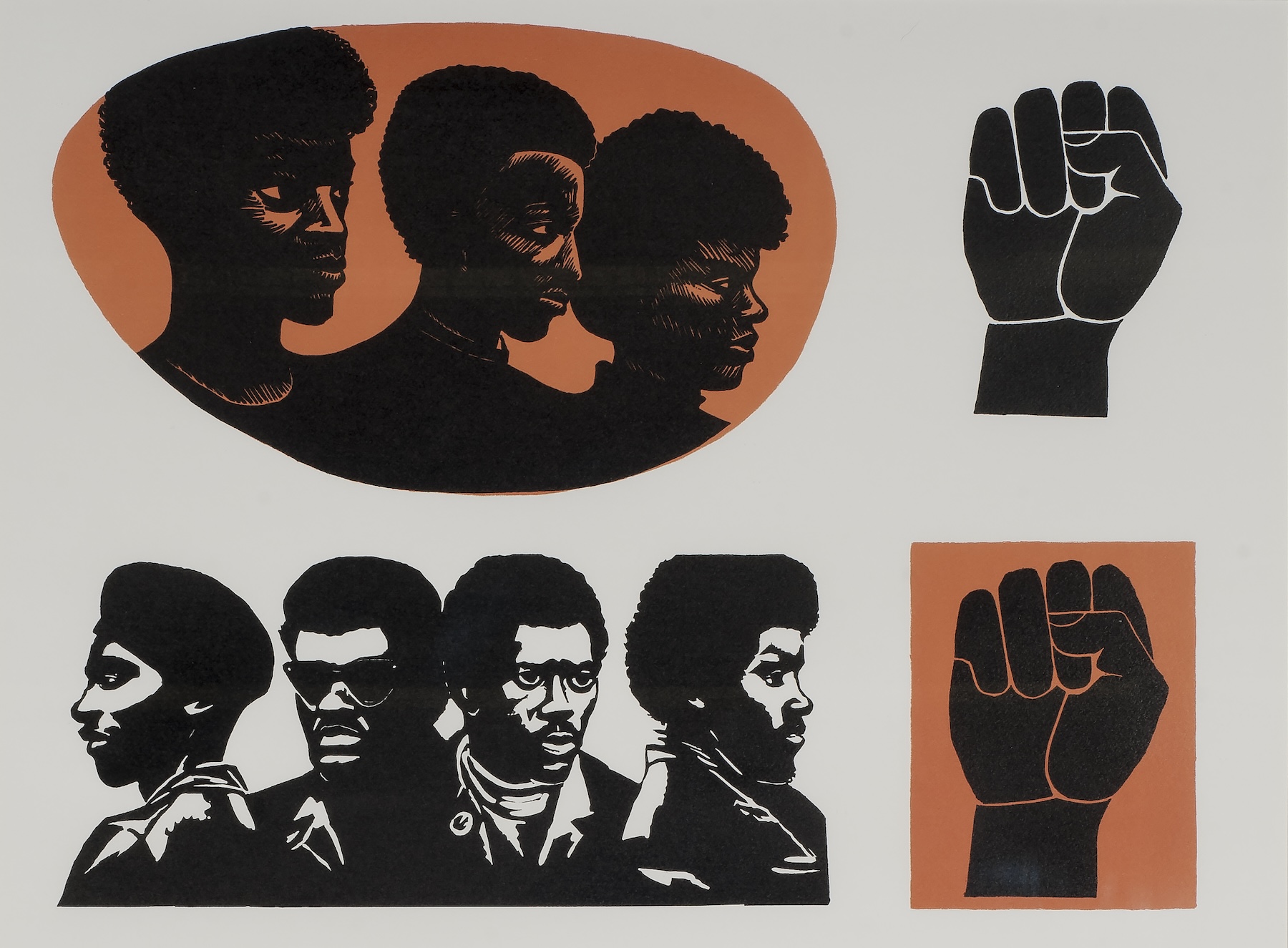
Tracey Johnson, assistant professor of history and African American studies, picked pieces ranging from the mid-19th century to the present for her survey course HIST 3165: History of Art and Activism in the United States. This course focuses on issues such as racial injustice, homelessness and the HIV/AIDs crisis through the lens of creative activism and protest.
“This class really shows how art pushes movements forward,” said Johnson. “Some of the biggest movements, there’s an aesthetic that goes with it. Like the Black Power, Black Panther movement — you think about the berets, you think about the guns, you think about them wearing black and leather and all that stuff. That is aesthetic, that’s art and it’s all purposeful.”
The course also includes works of theater, dance and literature along with the visual pieces in the study gallery. For example, Johnson chose Joyce Kozloff’s “Maui: Sugar Plantation” to connect the colonization of Hawaii to current discussion of Puerto Rico after she noticed her students’ interest in Bad Bunny’s popular Super Bowl halftime show.
Barbara McCaskill, research professor of English, also selected a wide range of pieces to accompany her course, ENGL 4791: American Autobiography. This semester, she is focusing her class on themes of “community and belonging, land and environment, hope and loss, and visibility and erasure,” and students will write their own memoirs in response to these themes.
“I want them to think about the ways in which they grew up — whether it was an urban environment or rural environment, whether it was the United States or outside the United States, how did that particular place itself inform a sense of who they are?” said McCaskill.
Her inclusion of Kristin Leachman’s “Longleaf 2” invites us to look at minute details of our surroundings, while a woven Gullah basket made from sweetgrass invokes discussion about how we take from the land. One piece that McCaskill is excited about is an untitled work by Radcliffe Bailey because of the artist’s ability to construct polyvocal stories that cross time, generations and space. Although Bailey’s piece is complex, McCaskill hopes that by exposing her students to it and the other works they can gain confidence in their ability to interpret art of any medium.
“I just want to say how grateful I am to the Georgia Museum for providing this kind of space,” she said. “It helps us to refine our ability to interpret art, and it contributes to a sense of confidence about our interpretations.”
Interested in working with the museum for a future study gallery installation? Contact Alexis Gorby, associate curator of academic and campus engagement, at alexis.gorby@uga.edu.
Authored by:
Elizabeth Kim