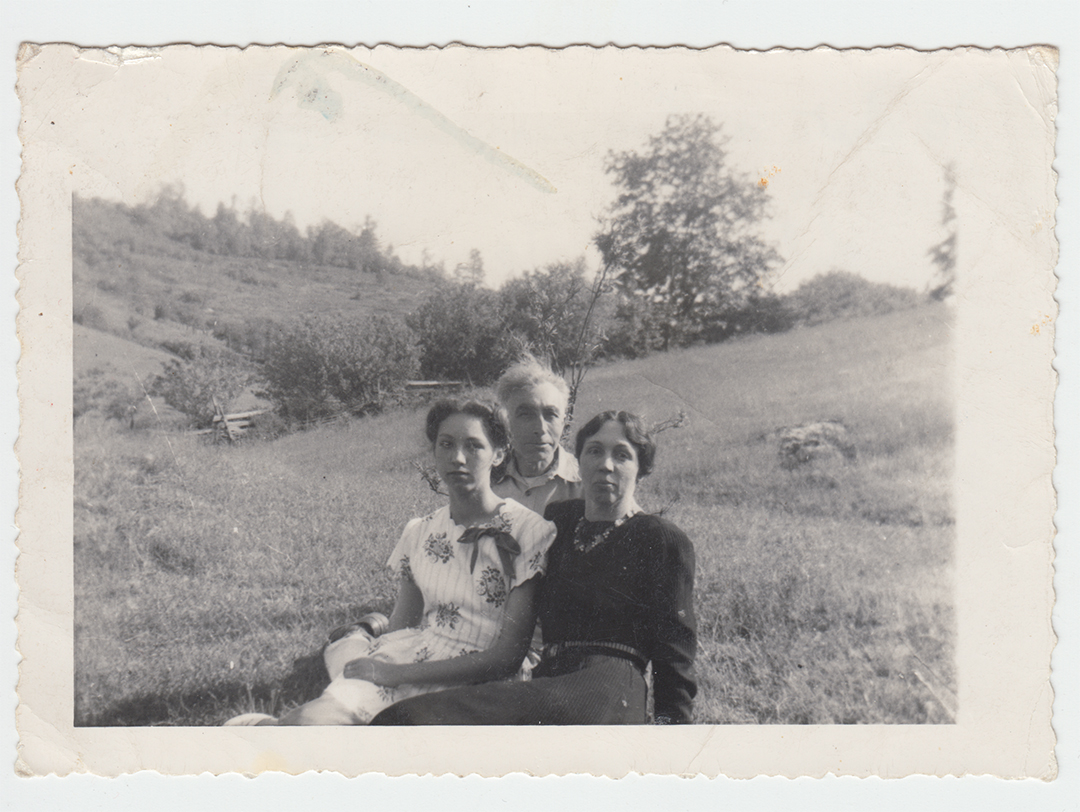
In 1927, Catalan artist Pierre Daura(opens in new tab) met Virginia-born Louise Heron Blair, who was studying art in Paris, France. They married in 1928 and, in 1930, had their daughter and only child, Martha. When Louise fell ill, the family sought treatment in Virginia. Unable to move back to France because of World War II, the family remained in western Virginia. Daura’s extended stay allowed him to go around the Virginia countryside and capture its beauty in his paintings.
This time in Virginia was highlighted in the exhibition “From Spain to Virginia: The Art and Times of Pierre Daura,”(opens in new tab) a collaboration between the Georgia Museum of Art and the Taubman Museum of Art in Roanoke, Virginia. The exhibition, on view at the Taubman from October 30, 2020, to March 14, 2021, surveyed works from Daura’s time in Spain, France and Virginia.
The exhibition, organized by Pierre Daura Curator of European Art Nelda Damiano and Pierre Daura Curatorial Research Assistant Julia Kilgore, showed more than 30 paintings and watercolors. The works on display showcased Daura’s wide range of interests, including portraits, landscapes, still lifes and geometric paintings. The exhibition highlighted the Taubman’s extensive collection of Daura’s works and included several loans from southern museums.
Because of the COVID-19 pandemic, the museum’s team was unable to travel to Roanoke and see the space in person. Putting the exhibition together virtually required a mixture of talent and technology. Georgia Museum of Art staff relied on the Taubman’s team members, who are familiar with the space and its lighting, to relay accurate information about the gallery. Preparator Elizabeth Howe Marable created a digital rendering of the space and a layout of the works of art in the exhibition. The team at the Taubman used that information to create a physical 3D model to design the show. “It was an interesting old-school versus new-school style of organization,” Kilgore said. “It just goes to show how each museum may have a different preferred method to help them visualize an exhibition space when working on layouts.”
Kilgore spoke on how the pandemic has changed the pace at which museums run. “The logistics surrounding the organization of art loans is always a balancing act,” she said. “But the pandemic created sudden changes in many exhibition schedules and impacted staff availability to work on tasks surrounding loan preparations, creating delays and requiring compromises.” Much to Kilgore’s disappointment, she and her team were unable to visit the Taubman and see the exhibition in person.
By Nekabari Ereba