The Georgia Museum of Art’s Samuel H. Kress Gallery was refreshed in September, adding religious images by European artists rarely exhibited in Athens. Three new paintings, on loan from the Sean N. Parker Foundation, are now on display alongside paintings, prints and decorative arts from the museum’s permanent collection. The gallery, which features European art from the 14th century to the early 19th century, also received a fresh coat of paint and updated wall text to reflect the museum’s new branding.
The Parker Foundation is a philanthropic organization with an art collection that spans 20 centuries and reflects cultures from around the world. With a mission of making art accessible to global audiences and encouraging scholarly research, the foundation loans works to museums and supports public programming. Since 2024, the foundation’s generosity has enabled the Georgia Museum to exhibit exceptional works that complement its own collection.
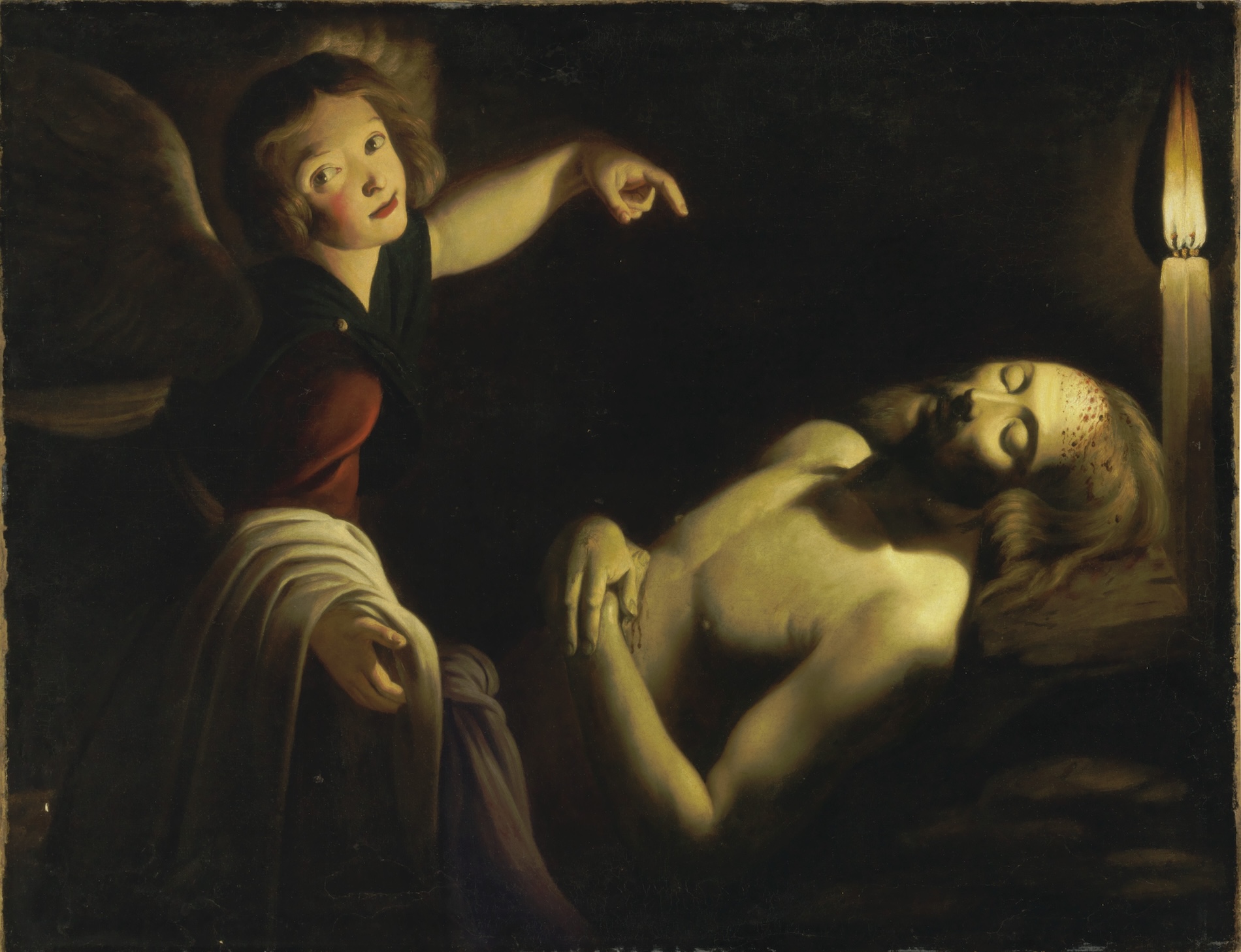
One example is Trophime Bigot’s “Angel Watching Over the Dead Christ.” A French artist, Bigot is known as the “Candlelight Master” due to his skillful use of light and expert dramatization of scenes. This scene perfectly illustrates Bigot’s ability to illuminate figures with the flame of a candle. Though he did not produce many paintings during his lifetime, the works he did complete are powerful and evoke intense emotion.
Gaetano Gandolfi, whose background and style are most aligned with the other works currently on view, was one of the leading Italian painters during his lifetime. Created at the height of his career, “The Annunciation” depicts the moment the archangel Gabriel visits Mary to inform her she will give birth to Jesus.
Vincent Sellaer was a Flemish painter active during the 16th century, and though little is known about his life, his art had an interesting mix of both Italian and northern styles. His painting “The Holy Family with Saint John the Baptist, Saint Elizabeth and Zacharias” shows a young Jesus with members of his family. A green parrot, perched on a woven basket, references the fact that parrots were associated with the divine word of God because they could imitate human speech.
The gallery also features a pair of prints by Hendrick Goltzius, a German-born Dutch artist, from the museum’s collection. “The Last Supper” and “Christ on the Mount of Olives” are part of a series of twelve engravings depicting the Passion of Christ that will rotate throughout the year. Goltzius’ engravings were extremely intricate, and he was praised for his technical mastery.
Collectively viewed with the other works in the gallery, the three loaned paintings and Goltzius’ prints highlight changing depictions of religious figures as the centuries passed. Nelda Damiano, the museum’s Pierre Daura Curator of European Art, said, “I think what’s going to be most apparent is the dramatic shifts in style from almost one decade to another or from a century to another. For example, saints were represented in a way that felt elevated and unrelatable in the 15th century to figures that were humanized and with whom viewers could identify with in the 16th century.”
The Catholic Church often commissioned artworks depicting saints, angels and sacred stories. In the sixteenth century, there was a movement to start showing religious images in more relatable fashion, with the hope that people would identify themselves more with these figures. Damiano said the church hoped this effect would “elicit more piety, more devotion, by seeing this happen by example.”
Together, these new additions reflect the Kress Gallery’s evolving story. The loaned works will remain on view through 2028, giving visitors ample time to take in the intentional shifts in style and representation of religious images.
Authored by:
Paige Carter