When we think of Renaissance Europe, we mostly picture white people, but the real story was different. To illuminate this history, Georgia Museum of Art, in collaboration with the University of Georgia’s Willson Center for Humanities and Arts, the UGA Humanities Council and the UGA department of history, will present a special screening of “We Were Here: The Untold History of Black Africans in Renaissance Europe.” This groundbreaking documentary will be shown on March 14 at 5:30 p.m. as part of the 2025 UGA Humanities Festival and the Willson Center’s Global Georgia public event series. A moderated discussion with Italian-Ghanaian director Fred Kudjo Kuwornu will follow the screening, which is free and open to the public.
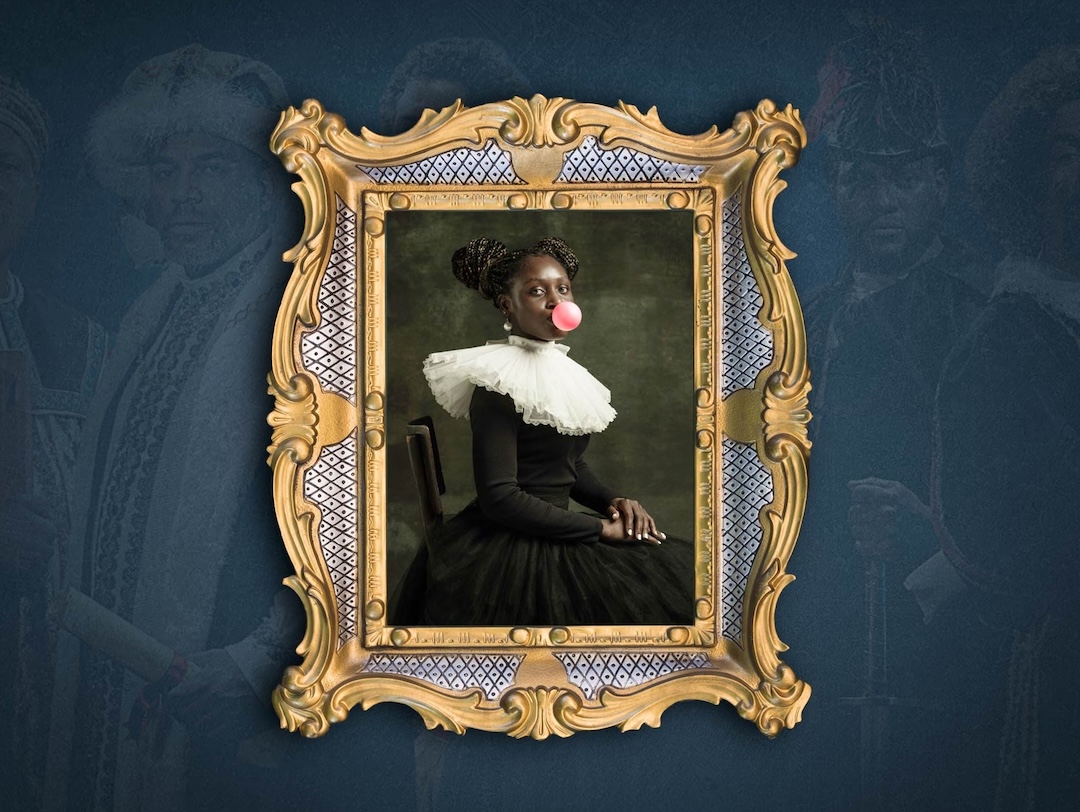
“We Were Here” is an eye-opening documentary that sheds light on the overlooked and undervalued presence of Black Africans in 15th- and 16th-century Europe. Filmed across Italy, France, Spain, Portugal, England, the Netherlands and Brazil, this multilingual film reinterprets iconic paintings and historical stories to highlight significant roles that Black individuals played during the Renaissance. Although many people believe that Africans in Europe were merely enslaved people or domestic workers, the film features princes, saints, writers and artists, such as Spanish painter Juan de Pareja, who shaped European culture and history in profound ways.
“History is an attempt to articulate the human experience of the past for those living in the present and those who will come in the future,” said Kuwornu in an article published by the University of California, Santa Barbara’s news outlet The Current. “History is not a fixed container but a dynamic space where what is included or excluded depends on the narrator. Minorities, forgotten voices and overlooked events are as much a part of history as the more widely known ones, but without a proper frame, they risk becoming invisible.”
After its premiere at the Venice Biennale in 2024, “We Were Here” gained international acclaim for its aesthetic and intellectual contributions. It challenges conventional historical narratives and offers a new Afro-European perspective on the Renaissance, making it an essential educational resource for understanding the development of racial ideas and the influence of African contributions on European art and culture. Viewing “We Were Here” is an opportunity for students, faculty and the community to engage with untold stories that can reshape our understanding of the past and its impact on the present.
This screening is a highlight of the third annual UGA Humanities Festival, which showcases the diverse research and scholarly achievements in the humanities at UGA and throughout its extended community. Launched in 2023, the festival has quickly become an important event for interdisciplinary discussions and public engagement. Organized by the UGA Humanities Council (which includes Dr. Callan Steinmann, the museum’s head of education and curator of academic and public programs) with support from the Office of Research, the Office of the Provost and the Franklin College of Arts and Sciences, the festival brings together more than 30 colleges, schools, departments and units across the university.
This year’s UGA Humanities Festival will run March 11 to April 2, with lectures, performances, film screenings and author readings held on and off campus. In addition to the screening of “We Were Here,” the museum will host two other affiliated events. Paola De Santo, associate professor of Italian at UGA, will offer a gallery talk in the exhibition “Beyond the Medici: The Haukohl Family Collection” on March 26 at 2 p.m. Co-hosted by the museum and the Lamar Dodd School of Art, a two-day Symposium of Ukrainian Art on March 27 and 28 will feature three exhibitions, a panel discussion, lectures and research presentations by graduate students.
For a full schedule of this year’s UGA Humanities Festival, visit the Willson Center’s website.
Authored by:
Rachel Dantes-Palmer