The Georgia Museum of Art recently completed a major reinstallation of its Barbara and Sanford Orkin Gallery. Among an array of modern and postwar works, visitors will be able to view a striking new addition: a bronze sculpture by John Rhoden. The work is part of a gift of nine sculptures the museum received in 2024 from the John Walter Rhoden and Richanda Phillips Rhoden Collection at the Pennsylvania Academy of the Fine Arts.
For Shawnya Harris, the museum’s Larry D. and Brenda A. Thompson Curator of African American and African Diasporic Art, the acquisition was a milestone. “I was thrilled,” she said. “I always loved Rhoden’s work and wanted the Georgia Museum to be included among the various institutions to receive gifts from his foundation at PAFA. It’s exciting to bring his voice into our galleries and share his story with new audiences.”
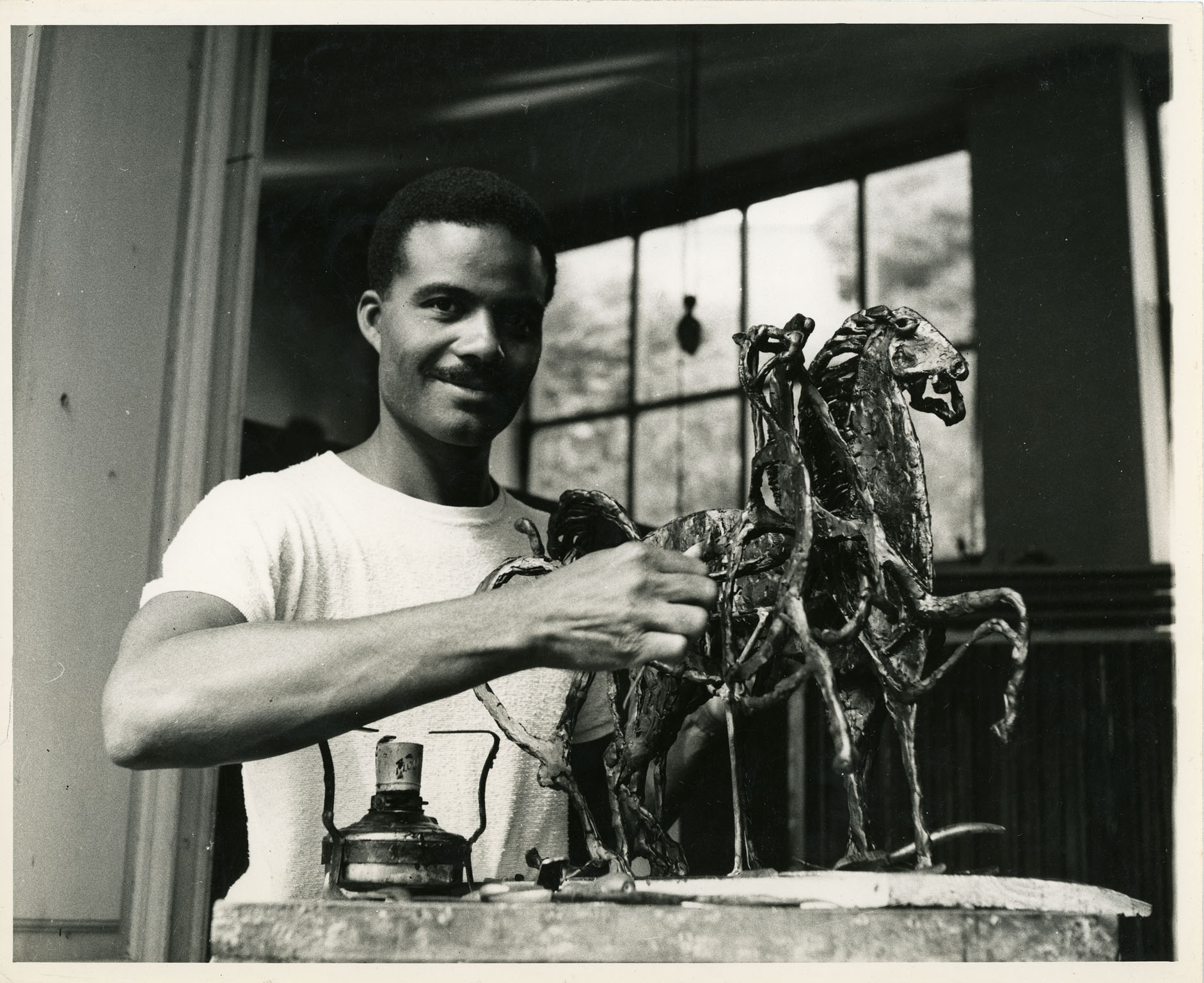
John Rhoden (1916 – 2001) showed artistic promise early. Born in Birmingham, Alabama, he created a bust of his high school principal when he was just 16 years old. After studying at Talladega College, he moved to New York in 1938 to study with renowned sculptor Richmond Barthé, joining a vibrant community of African American artists.
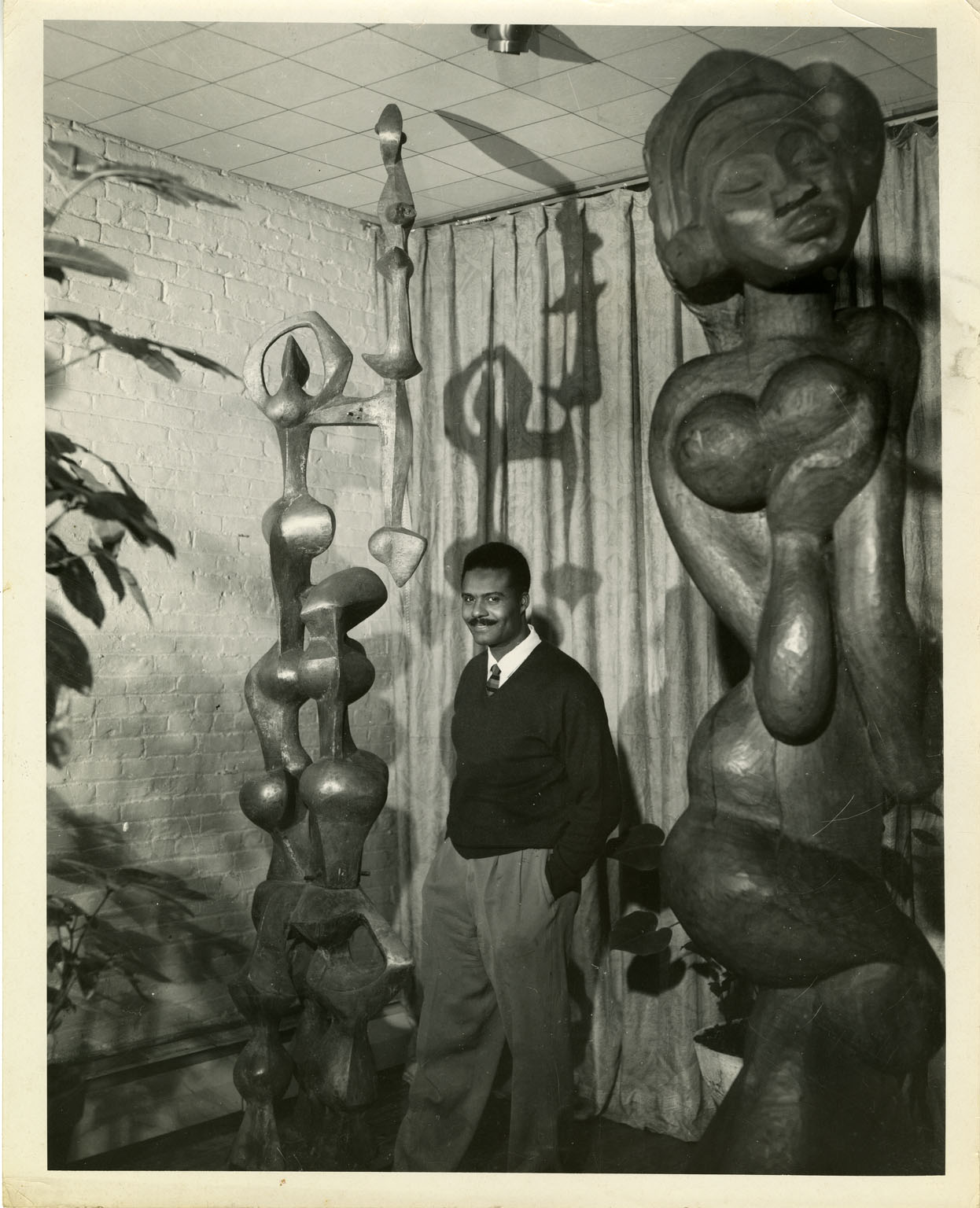
Rhoden served in the Army during World War II, then continued his education at Columbia University. He became the first Black visual artist fellow at the American Academy in Rome as a Fulbright Fellow, a groundbreaking achievement. The US Department of State then selected him to serve as an art specialist as part of the International Cultural Exchange and Fair Participation Act of 1956, leading him to visit over 20 countries. With his wife Richenda Rhoden (also commonly spelled Richanda), he traveled extensively, studying Indigenous art around the world and developing a distinctive modernist style. He worked in bronze, wood and stone, and his pieces have been exhibited at prestigious institutions including the Metropolitan Museum of Art and the Los Angeles County Museum of Art.
Harris emphasized what made Rhoden stand out. “Rhoden was deeply connected to international modernism from the mid-20th century onward, yet his practice stayed rooted in cultural identity and human expression,” she explained. “His career reminds us that Black artists were shaping global conversations through sculpture.”
One of the nine pieces the museum received is now on view in the recently reinstalled Orkin Gallery. Standing just under 30 inches tall, the untitled sculpture is cast in bronze and sits on a marble base. It captures an abstract figure in a moment of graceful movement, with flowing forms that seem to defy gravity. The figure balances on a single point, creating a sense of both stability and motion, as if frozen mid-gesture. As light hits the bronze surface, it emphasizes the curves and angles, making the piece feel alive with energy.
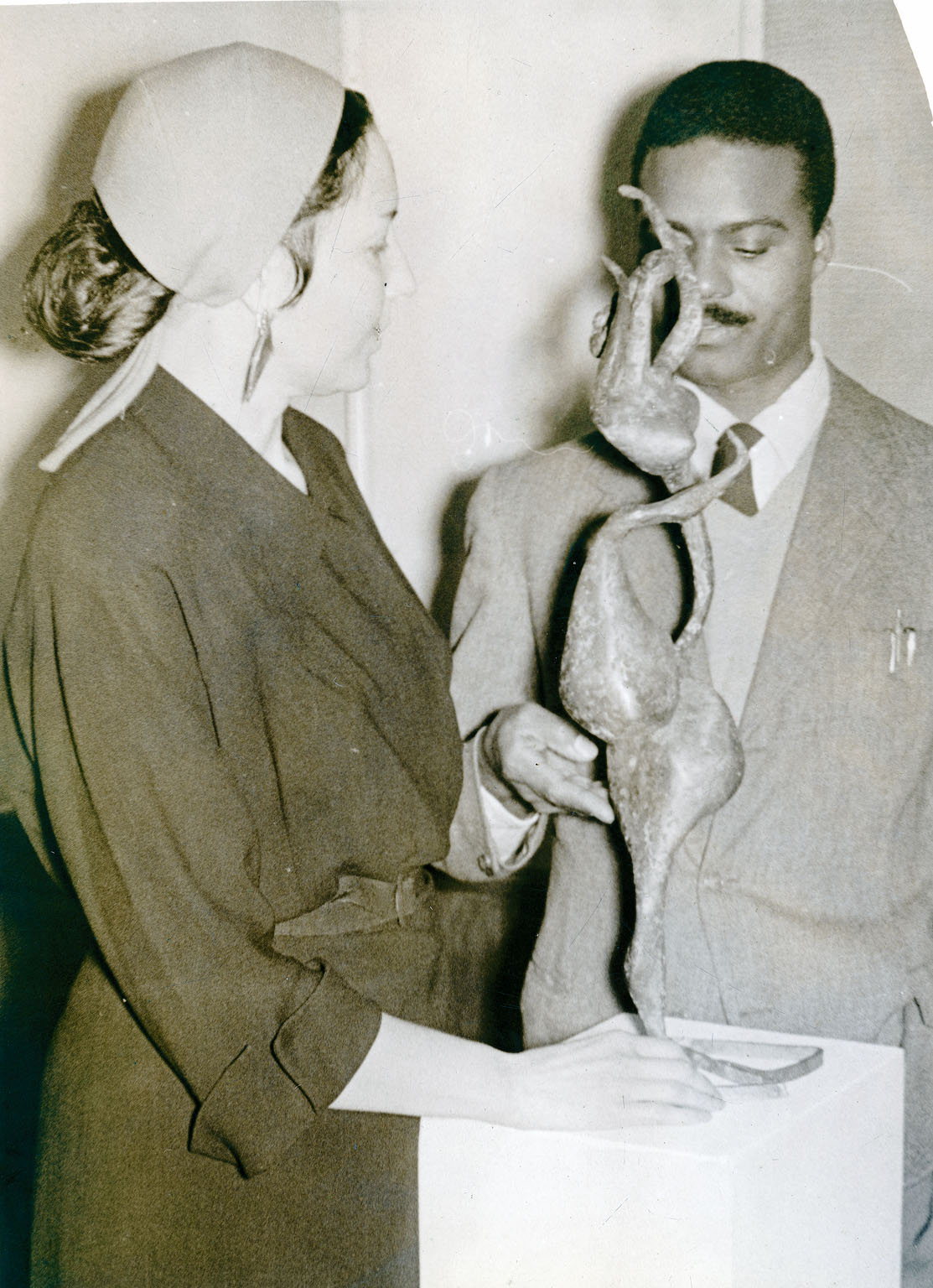
When asked what draws her to Rhoden’s work, Harris pointed to a distinctive quality. “I love how his sculptures balance strength and grace,” she said. “Whether he worked in wood or bronze, there’s a rhythm to his forms, something alive in the surfaces and gestures. His work feels timeless but also very personal.” This bronze sculpture exemplifies that observation, with elegant proportions and rhythmic flow that embody power and delicacy.
The other eight sculptures in the gift showcase Rhoden’s versatility. Together, they offer insight into his artistic range.
The gift to the Georgia Museum is part of a larger effort to preserve and promote Rhoden’s artistic legacy. In 2017, the Pennsylvania Academy of the Fine Arts was selected by the John Rhoden Estate to care for the artist’s work. The Rhoden Collection includes over 300 works of art and archival materials such as photographs, color slides and documents. The estate provided $5 million to fund a curator position, a publication and exhibition about Rhoden, an endowed scholarship for PAFA students and construction of a new arts center in honor of the Rhodens.
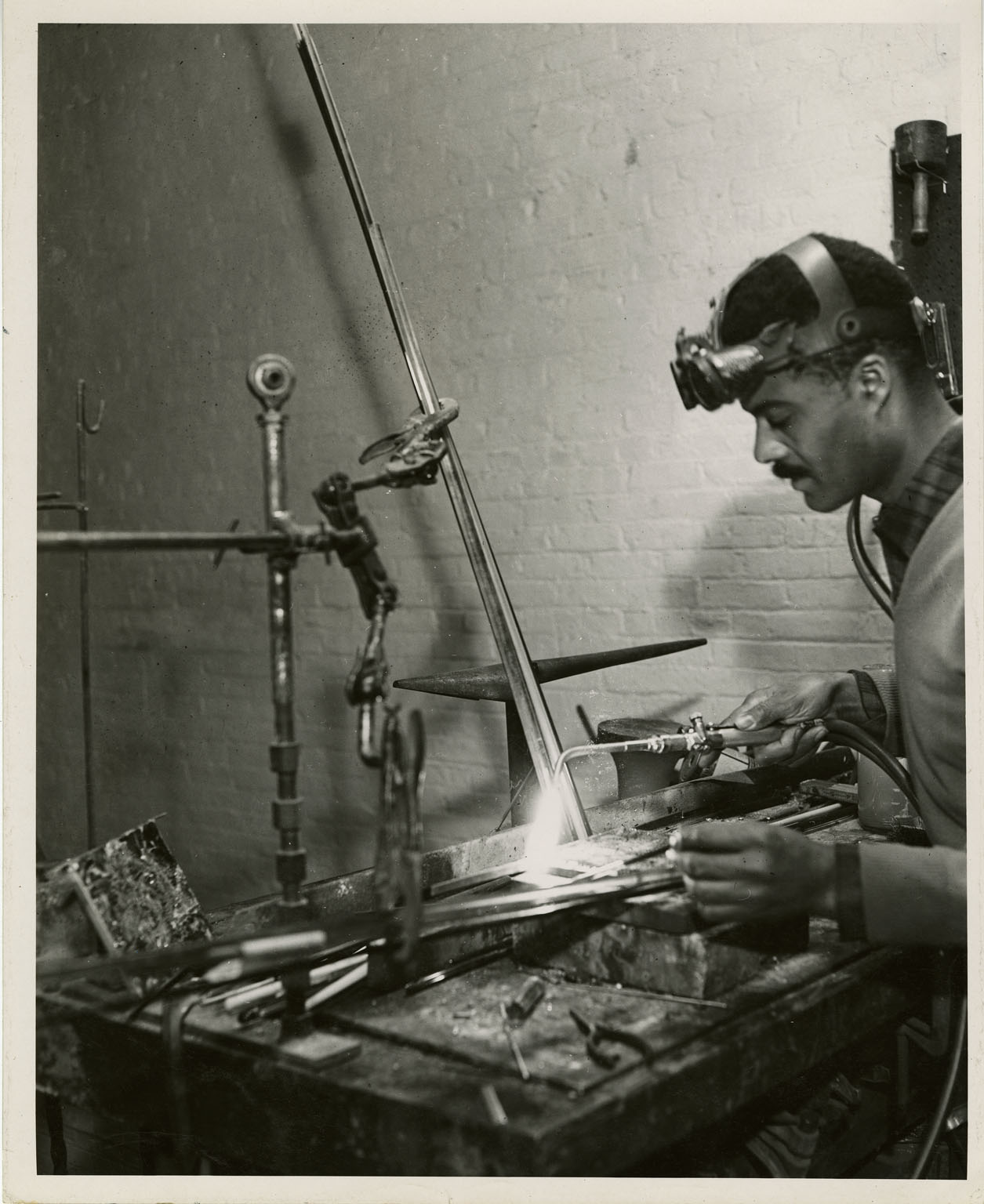
PAFA has been working to place Rhoden’s works in museums around the country, ensuring his legacy reaches new audiences. In 2019, PAFA was also awarded a $75,000 grant by the National Endowment for the Humanities to organize 5,000 digital objects into a free, publicly accessible archival collection documenting Rhoden’s life and career.
In the Orkin Gallery, Rhoden’s bronze sculpture is positioned near a listening station and paintings themed around sound and movement. The sculpture’s sense of rhythm and motion, frozen mid-gesture yet radiating energy, creates a natural conversation with these surrounding works. This placement invites visitors to consider how sculpture, sound and kinetic expression connect across different art forms.
The addition of these nine sculptures represents an important expansion of the museum’s holdings in African American and African Diasporic art. Rhoden’s work bridges international modernism and cultural identity, offering visitors a chance to engage with an artist whose global perspective and technical mastery set him apart. As Harris noted, his sculptures demonstrate how Black artists shaped “global conversations through sculpture” while maintaining a deeply personal and human approach to their craft.
Authored by:
Leticia Nogbe