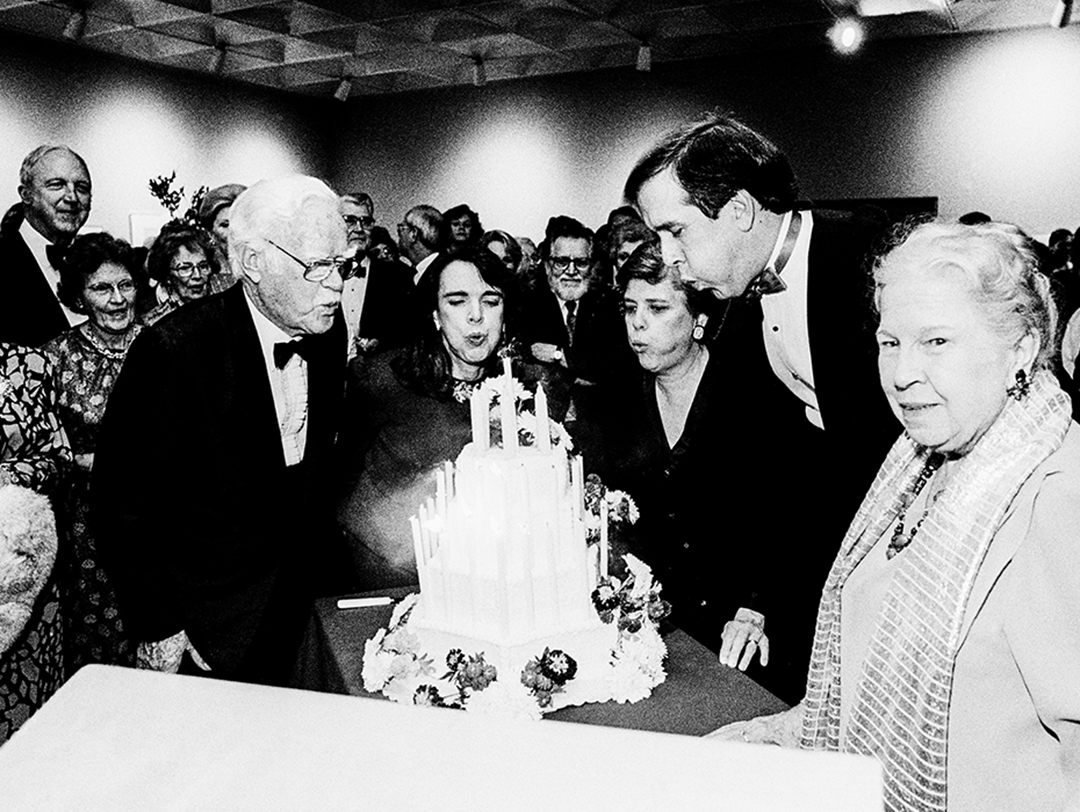
Lamar Dodd and President Charles Knapp blowing out candles on a cake with Alice Neel during the Georgia Museum of Art 40th anniversary celebration in 1988.
As we celebrate the 75th anniversary of our museum, it’s an opportune time to look back at our history. From now until the end of the year, we’ll be featuring a post once a month about the history of the museum through the decades. This month, we take a look at the museum’s presence and history on campus in the 1980s.
In the 1980s, the museum’s progress toward becoming an established art venue in the state was fully recognized when the Georgia General Assembly designated the Georgia Museum of Art as the official state art museum in 1982. This new designation was significant in the history of the museum, and the museum still serves that state role today.
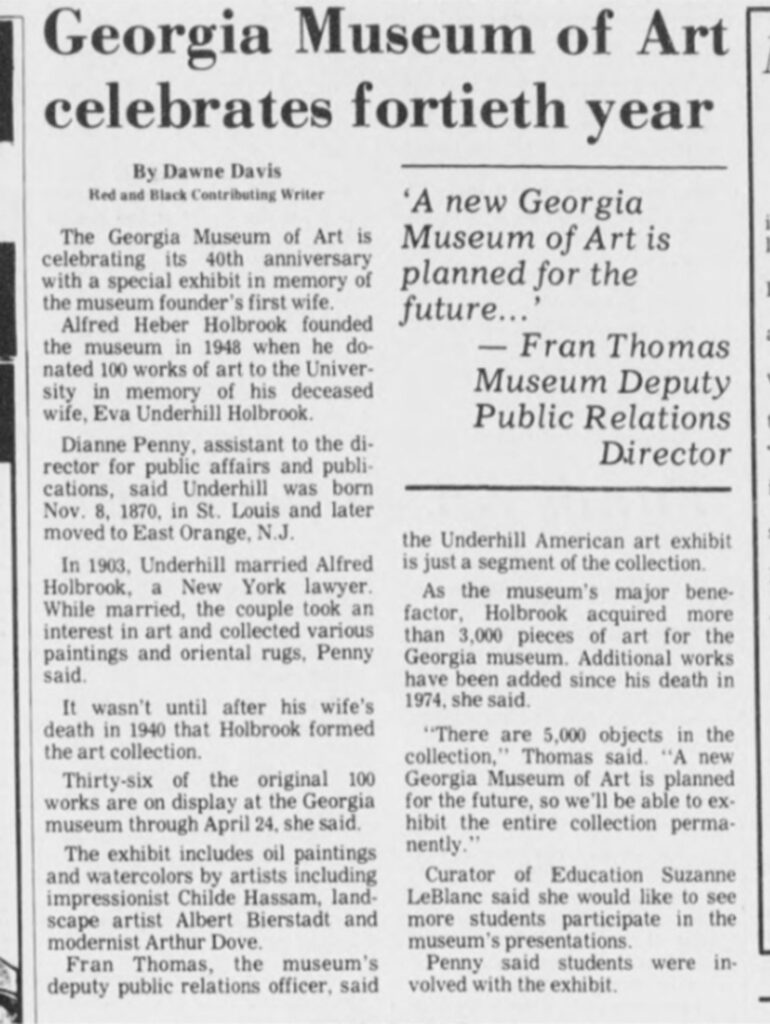
Another major milestone of the decade was the museum’s 40th anniversary celebration, which included a party at the North Campus museum (now the Administration Building) and unveiling of a Willem de Kooning painting acquisition and a special exhibition in honor founder Alfred Heber Holbrook’s first wife, Eva Underhill Holbrook, featuring 36 works from the 100 original works Holbrook donated to begin the permanent collection. Newspaper archives from The Red & Black detail the acquisition of the De Kooning painting, “Color for Blonde Woman,” that was unveiled part of the 40th-anniversary celebration.
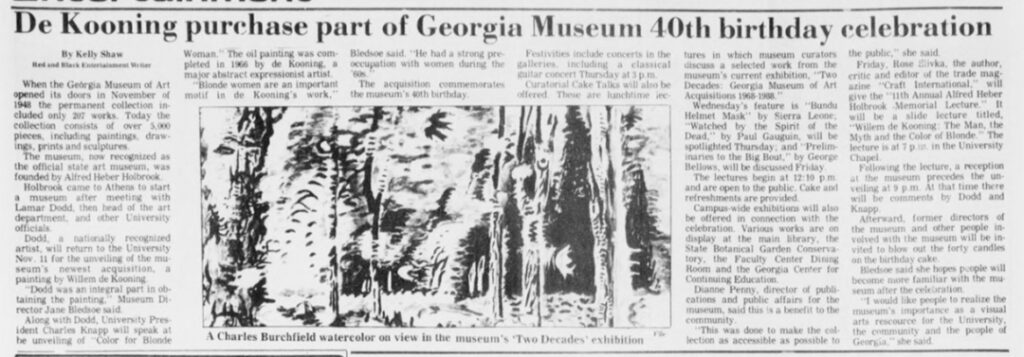
While the decade marked the museum’s recognition as an established state art venue, there were other issues during this time that presented major challenges for museum staff and progress. For one, the permanent collection had grown to more than 5,000 works by 1979, and space was becoming an issue. By the 80s, it was clear that the museum was outgrowing its beloved home in the old library building on North Campus. Budget cuts and the continued lack of space also led to a reduction in museum staff, with overflow storage of works allotted to the previous office space; ultimately, the lack of storage space meant that curated in-house exhibitions, as well as visiting exhibitions, were reduced by half by the beginning years of the decade. Much of the 1980s, thus, focused on trying to garner donations and make plans for a new museum home. A projected price tag of more than $8 million made the likelihood of a new museum unlikely at the time, director Bill Paul told the Red & Black in a 1979 interview.
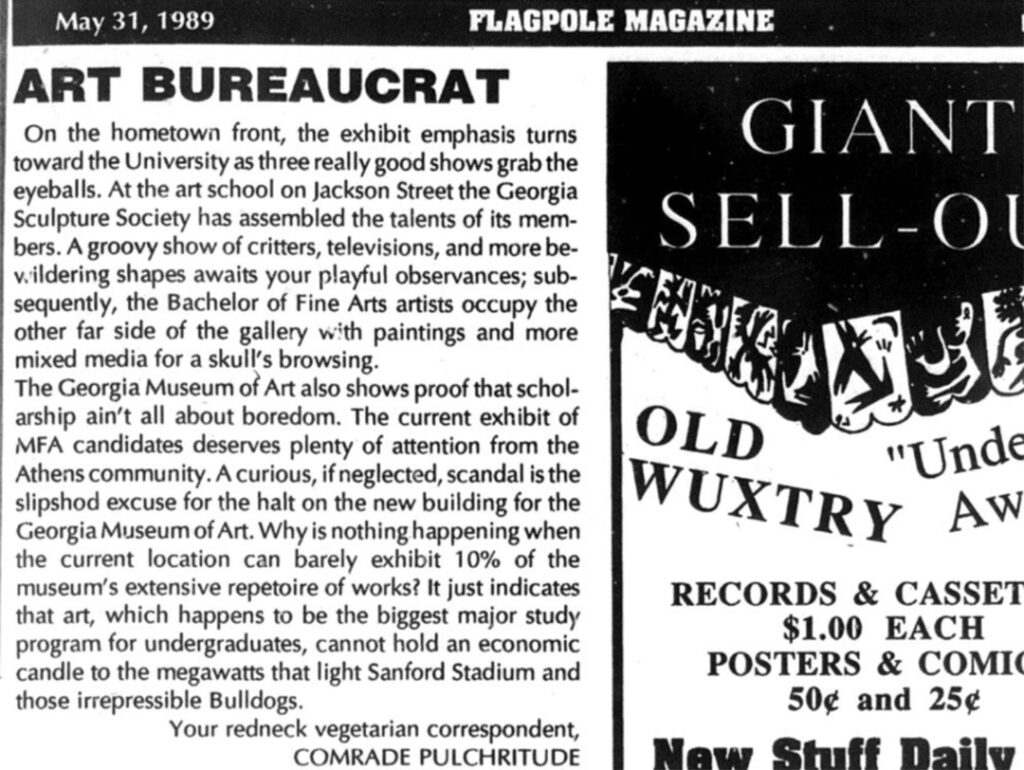
Later, under new director Richard Schneiderman (who served as director from 1981 to 1986, followed by Carl Winthrop as interim director from 1986 to 1988 and Jane Bledsoe from 1988 to 1991), there was renewed hope in the possibility of building a new museum on North Campus, with the UGA Bicentennial Campaign as an ideal fundraising opportunity for the effort; however, the effort fell short and plans to build the proposed new museum were abandoned. The museum’s struggle for space and to build a new home would continue until the mid-90s when the current location on East Campus was built.

While the museum’s growth was slowed by space issues, there were other significant markers of success and development during the decade. In 1985, “Georgia’s Legacy: History Charted Through the Arts” opened, celebrating UGA’s bicentennial and serving as the museum’s first major effort in decorative arts.

The museum also began its Family Day programming in 1986. Free for all ages, the once a month Saturday morning event, which offers art activities and educational programming, still takes place today and has served tens of thousands of people since it began. In 1987, the museum also held its first Elegant Salute gala fundraiser, another tradition that continues today. Finally, the end of the decade was marked by the opening of the Museum Shop. Today, patrons and supporters can visit the shop online or in-person for a variety of art related gifts, apparel and supplies.

Authored by:
Jessica Luton