

The South in Black and White: The Graphic Works of James E. Routh Jr., 1939 – 1946
August 25 – October 21, 2012
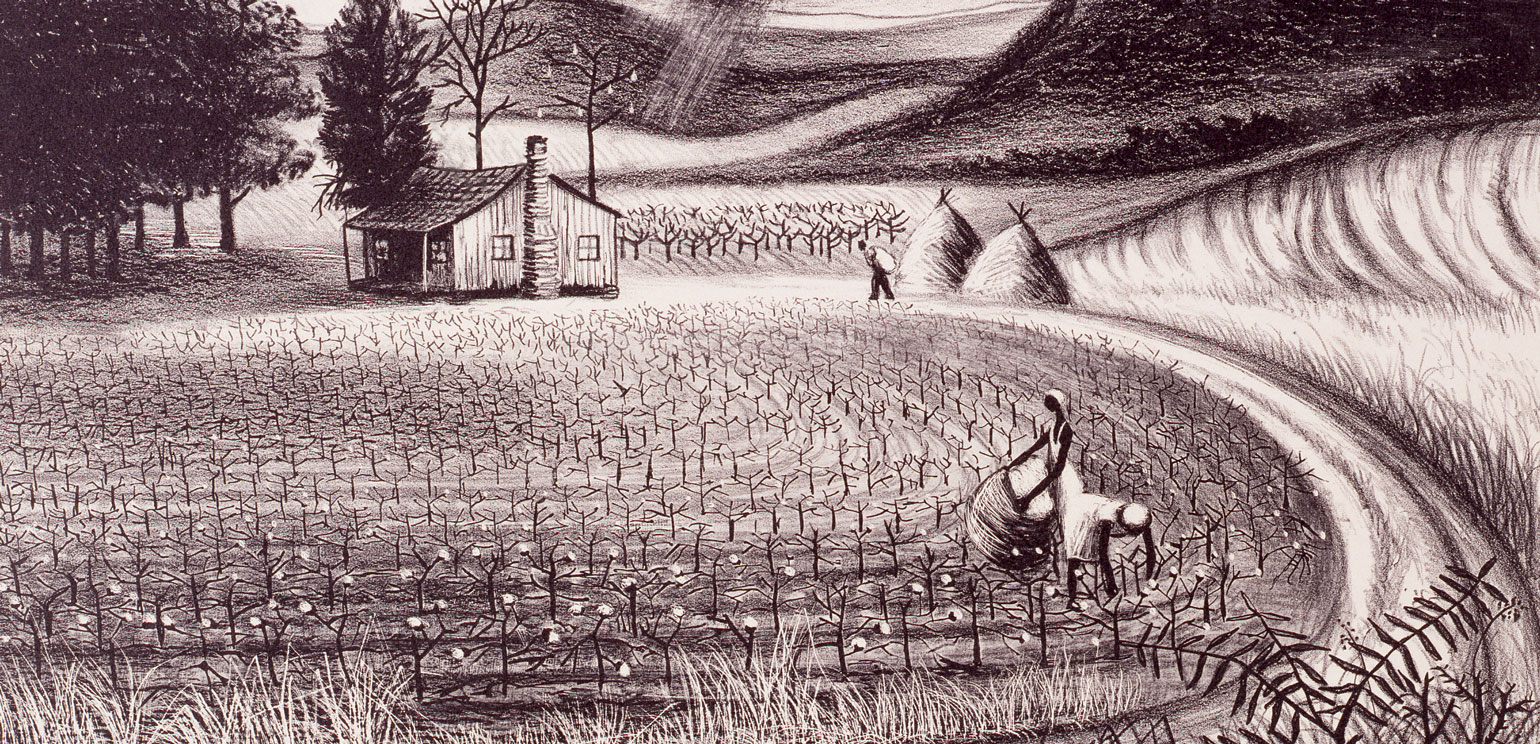
the rural landscape under siege
James E. Routh Jr. was born in New Orleans in 1918 and grew up in Atlanta. In 1936, Routh enrolled in the Art Students League in New York City to study painting, printmaking and lithography. Endowed with a year-long Rosenwald fellowship in 1940, Routh traveled in Georgia and throughout the South for 16 months, sketching scenes from everyday life in ink wash and watercolor. This exhibition, organized by the Georgia Museum of Art and originally on view at the Robert C. Williams Paper Museum in Atlanta, featured the prints and paintings Routh created from his sketches. In many of his prints, Routh depicts rural Georgia dominated by the cotton industry. The scenes show the damaged and eroded land resulting from years of over-cultivation as well as the impoverished state of the South during the Depression. Other prints show factories invading the rural landscape, emitting black clouds of smoke as workers approach, dwarfed by the smokestacks.
The museum published a fully illustrated catalogue to accompany the exhibition.(opens in new tab)
Curator
Stephen Goldfarb (in-house: Laura Valeri, associate curator of European art)
Sponsors
The W. Newton Morris Charitable Foundation and the Friends of the Georgia Museum of Art