


A composition is the placement of shapes or other elements in a work of art. Composition means “putting together.” This painting by Albert Eugene Gallatin shows a composition made from layered shapes and colors. Gallatin thought that good art shouldn’t just re-create reality. He believed that great art combined flat lines, shapes, colors and textures to make something new.
Check out Gallatin’s “Composition.” Are there points where the shapes combine? Places where they never touch? Do the shapes remind you of anything?
Gallatin believed that making art was like experimenting in a scientific laboratory. In this activity, you’ll experiment with shapes and colors to make your own puzzle composition on popsicle sticks. Then, you can jumble them up and try to put them back together or figure out new combinations.
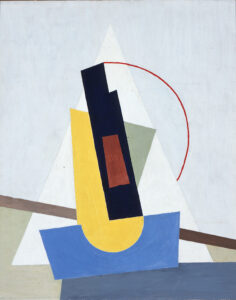
Albert Eugene Gallatin (American, 1881 – 1952), “Composition,” 1936. Oil on canvas. 20 1/8 × 16 1/8 inches. Georgia Museum of Art, University of Georgia; University purchase. GMOA 1973.3018.
For this activity you will need:
- Popsicle sticks
- Markers
- Tape


To make your popsicle stick puzzle:
- Line up the long sides of 10 to 12 popsicle sticks next to each other. Tape the sticks together on one side. This will be the base for your composition.
- Use markers to draw shapes and lines on the untaped side of the popsicle sticks. Tip: use lighter colors first and layer darker colors on top. Do you want to add many kinds of shapes or repeat the same shape?
- When your composition is completed, remove the tape and mix up your sticks. Try fitting them back together, or challenge a friend to try!