


The exhibition “Extra Ordinary: Magic, Mystery and Imagination in American Realism” includes American art that captures the strangeness and wonder of everyday life. Magic realist artists did not embrace fantasy to escape reality. Instead, they wanted to engage with it.
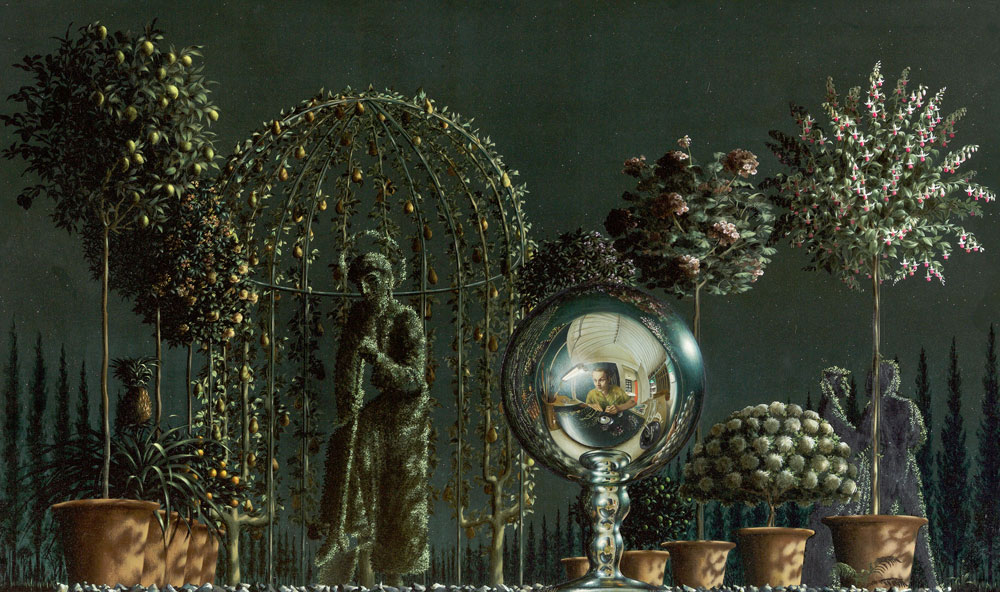 Brian Connelly (American, 1926 – 1963), “A Night Garden,” 1955. Oil on panel, 18 × 30 inches. The Schoen Collection: Magic Realism. Image courtesy of Debra Force Fine Art.
These artists wanted to show the world they saw around them. They turned to mystical, magical and imaginative images to examine key social issues. These issues include poverty, war and racism.
This exhibition is open through June 13. Visit the museum to see it in person.
Close Looking
Let’s take a closer look at this painting. What is the first thing you notice?
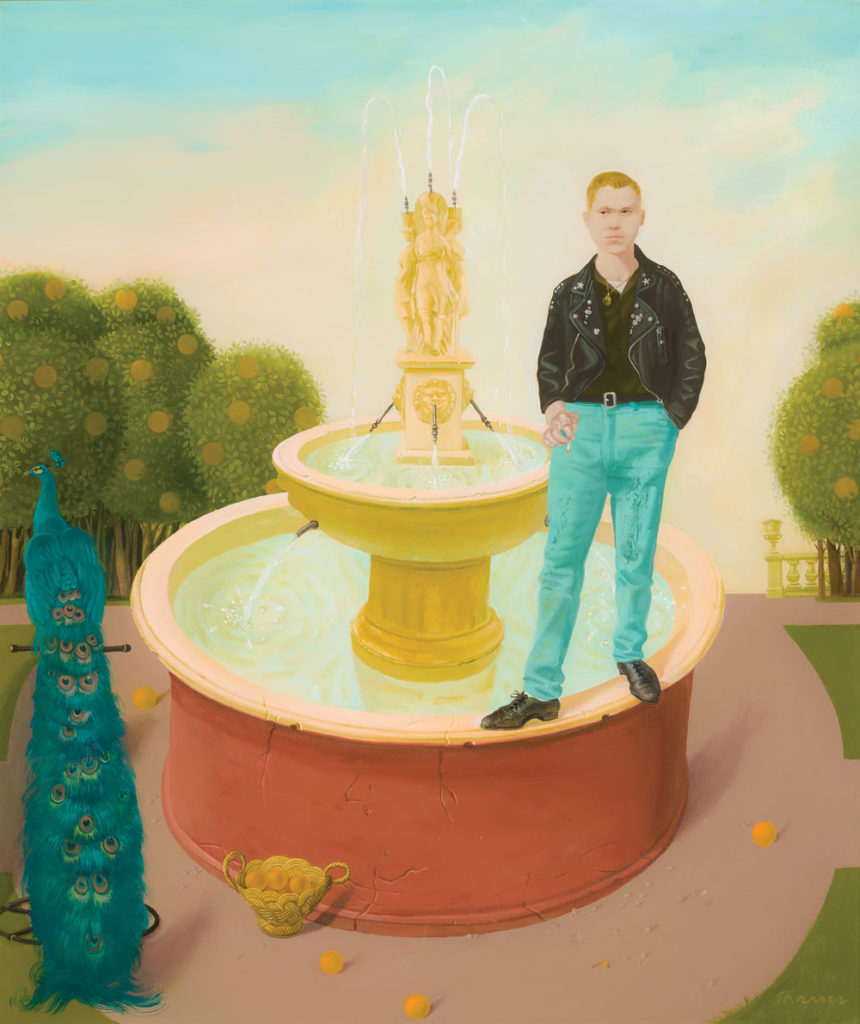 Honoré Sharrer (American, 1920 – 2009), “Young Man Standing on the Fountain,” 1988. Oil on canvas, 20 × 17 inches. Collection of Adam Zagorin and the late Peter Zagorin, courtesy of Hirschl & Adler Modern, New York.
Woman artist Honoré (ON-or-ray) Sharrer worked as a shipyard welder during World War II. Many women joined the workforce in the 1930s and 1940s. Their success showed that women could and should have career opportunities outside the home. Sharrer’s experience at the shipyard sparked her interest in painting the American working class, people who often work physical labor jobs for low pay.
Pretend you could interview the person in this painting to learn more about their life. Imagine how they might respond to the questions below:
What is your name?
What is your job?
What do you like to do for fun?
What are you thinking about?
Contemplating My Future
Take a moment to look at this painting. Artists often tell stories with their art. Name the first three details you notice. Can those details begin to tell a story?
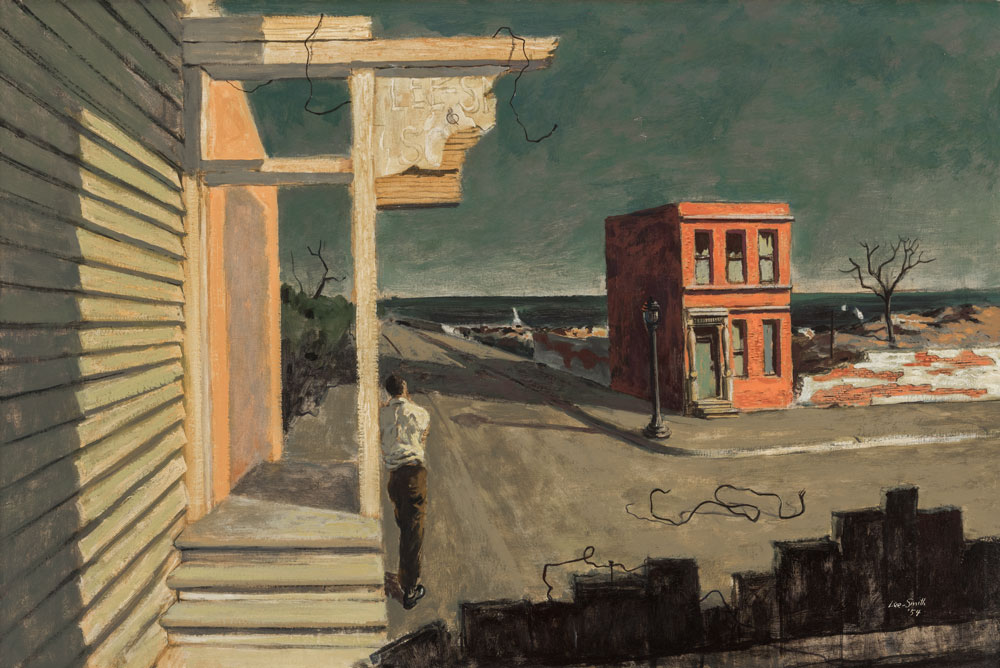 Hughie Lee-Smith (American, 1915 – 1999), “Contemplating My Future,” 1954. Oil on masonite, 24 × 36 inches. John and Susan Horseman Collection, courtesy of Jonathan Boos.
Take a closer look at the sign above the man’s head. Can you see the letters “Lee-Sm” and maybe “So”? The sign seems to point to the right. Can you tell where the man is looking? Does this look like any place you’ve ever visited?
Hughie Lee-Smith, a Black artist, created this painting in 1954. This was the same year the Supreme Court ruled against racial segregation in public schools. Lee-Smith was also going through personal changes. In this painting he addresses issues that both he and the nation were dealing with — questions of how to move forward and which way to go.
Extra Ordinary Collage
This activity is inspired by paintings in the exhibition that use a technique called “trompe l’oeil” (tromp l’oy). This French term means “trick the eye.” In trompe l’oeil art, artists draw or paint objects very realistically. The objects look real and solid. Notice in this painting how the objects look like they are coming out of the frame. The bit of painted canvas in the top right curls up to reveal a painting on the “front.” Now it is your turn to create something extraordinary.
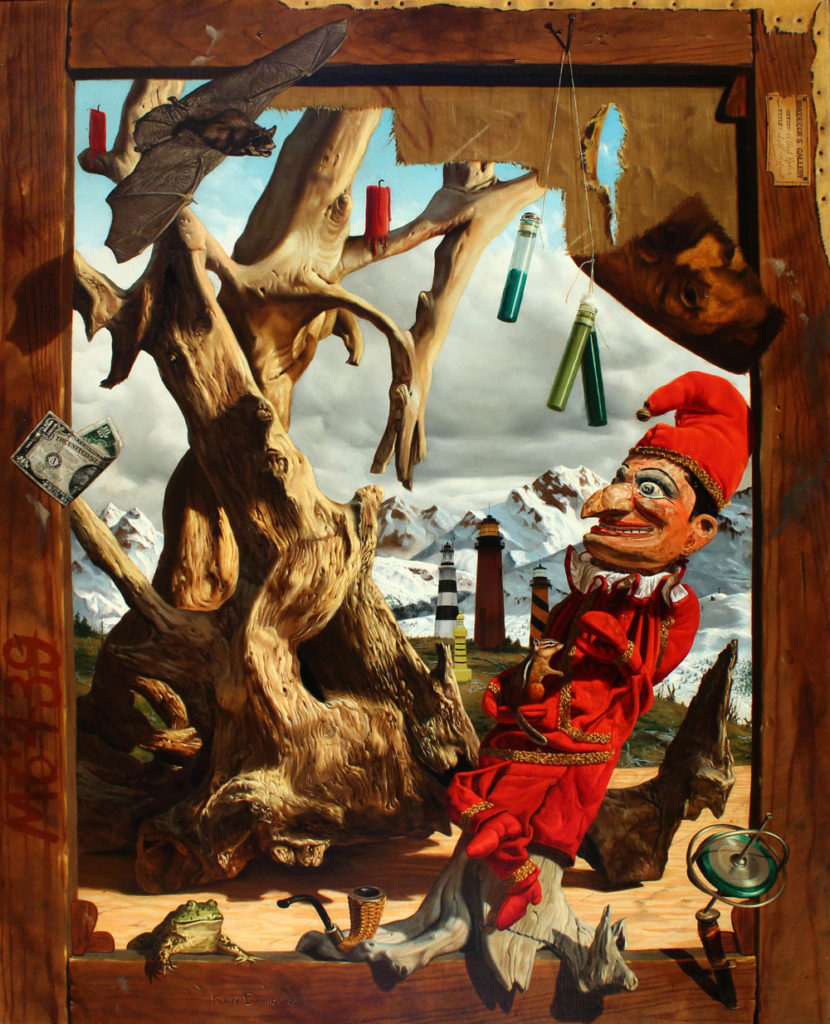 Ken Davies (American, 1925 – 2017), “Lighthouses in the Alps,” 1949. Oil on canvas, 43 × 34 inches. The Schoen Collection: Magic Realism.
You will need the following supplies:
- paper
- scissors
- collage images or magazines
- printed backgrounds
- gluestick

Directions:
- Choose a background.
- Look at images from the collage prints included. You can also use magazines you have around the house. Imagine what would look interesting added to your background.
- Cut out images and move them around on your background to decide where you might want each one. Be creative about your placement. Try grouping objects in imaginative ways or cutting different objects to fit together.
- Glue your images to the background and let them dry.
- Make another collage that looks totally different from the first.
TIP: Collage prints are from “Extraordinary Things to Cut Out and Collage” by Maria Rivans.