

The museum was founded in 1945 with 100 works of art. Since then its collection has grown to include more than 17,000 objects. Only a little bit of this collection can be shown at a time. When works of art are not out on view, they are in storage.
The exhibition “Inside Look: Selected Acquisitions from the Georgia Museum of Art” shows art recently added to the collection. Let’s take a closer look at Russian portraits and photographs of Appalachia by artists Milton Rogovin and Arthur Tress included in this exhibition.
Images of Appalachia
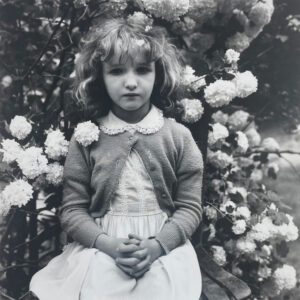
Arthur Tress (American, b. 1940), “Sickly Child, Kentucky,” 1968. Fiber-based gelatin silver print. Georgia Museum of Art, University of Georgia; Gifted by Dr. Pat and Patricia Kennedy. GMOA 2020.2025.
Arthur Tress and Milton Rogovin took photographs of people in Appalachia. Appalachia is a mountainous region in the eastern United States. The people there have often been isolated and impoverished. Tress and Rogovin were interested in capturing the skills and culture of those people.
After art school, Tress traveled around the world with his camera. His interest in folk traditions led to a job as a U.S. government photographer. Rogovin was an optometrist before he became an artist. He started taking photographs because he wanted to help the poor and bring attention to the problems workers faced.
Rogovin and Tress wanted to document local craftspeople, children and their environments. Take a closer look at these two photographs. What do you notice about these children? Do their clothes look like your clothes? What do you think these children liked to do for fun? If you could give these children a gift, what would you give them?
Close Looking: Russian Portraits
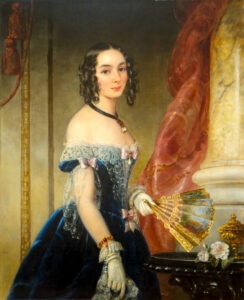
Christina Robertson. (Scottish, 1796 – 1854), “Portrait of Princess Elena Pavlovna Belosselsky-Belozersky (1812 – 1888),” ca. 1839. Oil on canvas. 48 1/2 × 40 × 1 1/2 inches. Georgia Museum of Art, University of Georgia; Gift of Marina Belosselsky-Belozersky Kasarda. GMOA 2018.140.
Many portraits of Russian people in paintings, photographs and engravings are included in this exhibition. A portrait is a work of art that shows a person as the main focus.
Look at the painting pictured above. Look carefully at the background surrounding the princess. What do you notice about what she is wearing and holding? What do these details tell you about her?
What would you want to include in a portrait of you? Use the lines below to describe what you would wear, hold and have in the background.
Fabergé-Inspired Frame


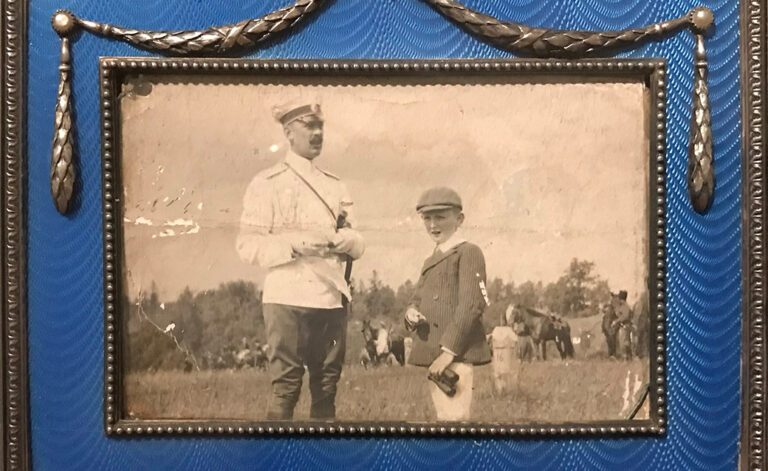
Fabergé frames. Georgia Museum of Art, University of Georgia; Gift of Marina Belosselsky-Belozersky Kasarda. GMOA 2018.145 (left) and 2018.152 (right).
These frames were made by the House of Fabergé in Russia. The House of Faberge made precious jewelry, including the famous Fabergé eggs, for wealthy Russian families. Look closely at the color, lines and shapes that decorate this frame. Now it is your turn to decorate a frame using beautiful materials.

You’ll need the following supplies included in the art kit (or found at home).
- wooden picture frame
- foil origami paper
- gems/beads/flat back pearls
- glue
- paintbrush
- scissors (not included)
To make your Fabergé-inspired frame:
- Decide if you want a solid color background or shapes in different colors. Cut the paper to cover the sides of your frame or into shapes.
- Apply a layer of glue on the back of your paper. Place it on the frame. Smooth the paper onto the frame to attach it.
- Trim the pieces of paper that hang off the frame or fold it over the back and glue it down.
- Repeat steps 1 – 3 until your frame looks the way you want it to.
- Using your paintbrush, place a dot of glue on your foiled frame where you want to add decorations. Continue adding beads and pearls until you are satisfied.
- Step back and admire your embellished frame. What will you put inside of it?
TIP: Think about creating a pattern with your embellishments. Could the design on one side of your frame match the other side? Could the corners match or should they all be different?
We’d love your feedback! Please take a few minutes to complete a survey about this program.
Family Day art kits are sponsored by Lucy and Buddy Allen and the Friends of the Georgia Museum of Art.