

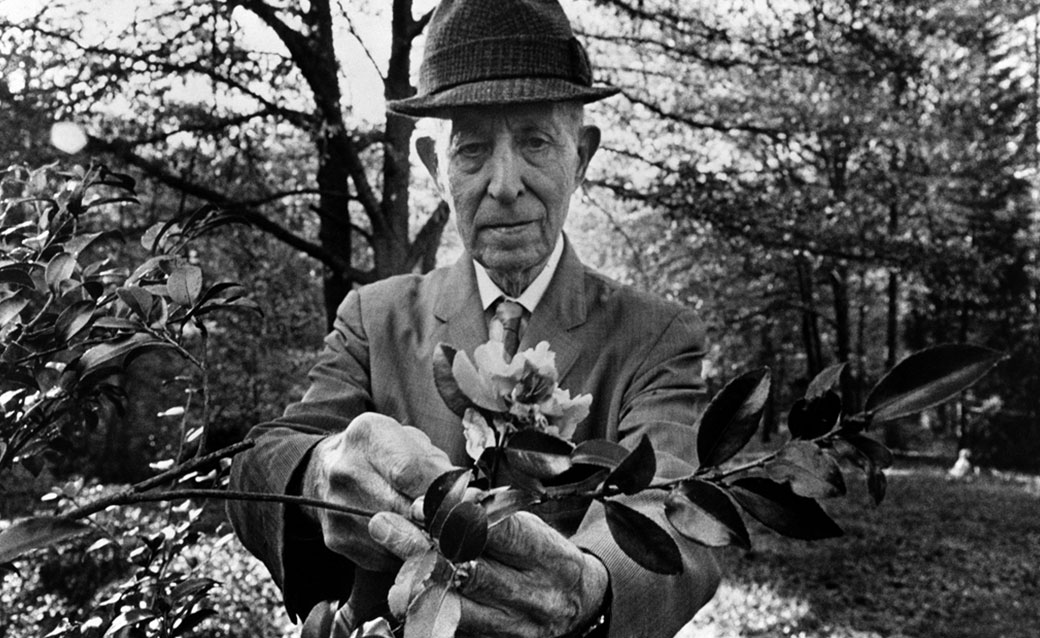
This Family Day focuses on three of the first works of art in the museum’s permanent collection. The founding director, Alfred Heber Holbrook, gave them to the museum. Virtual Family Day includes an activity page and a free art activity kit.*
Art for Everyone
Alfred Heber Holbrook started the museum in 1945 with his donation of 100 works of art. The museum is both part of the University of Georgia and the official state art museum. Since 1945, it has continued to collect important works of art. It now has over 12,000 objects: paintings, photographs, prints, furniture, silver and more
Holbrook believed in the idea of “art for everyone.” He used to load up paintings in the trunk of his car. Then he would drive all over the state to share works of art with anyone who crossed his path.
Now it is your turn to share art with your neighbors near and far! First, take a closer look at three works of art Holbrook donated to the people of Georgia. Next, create an art sign for your yard. Then draw your own art postcards to mail to someone special.
Close Looking
These three paintings were some of the first works of art in the museum’s collection. Holbrook donated them in memory of his wife Eva. They collected art together when Holbrook worked as a lawyer in New York.
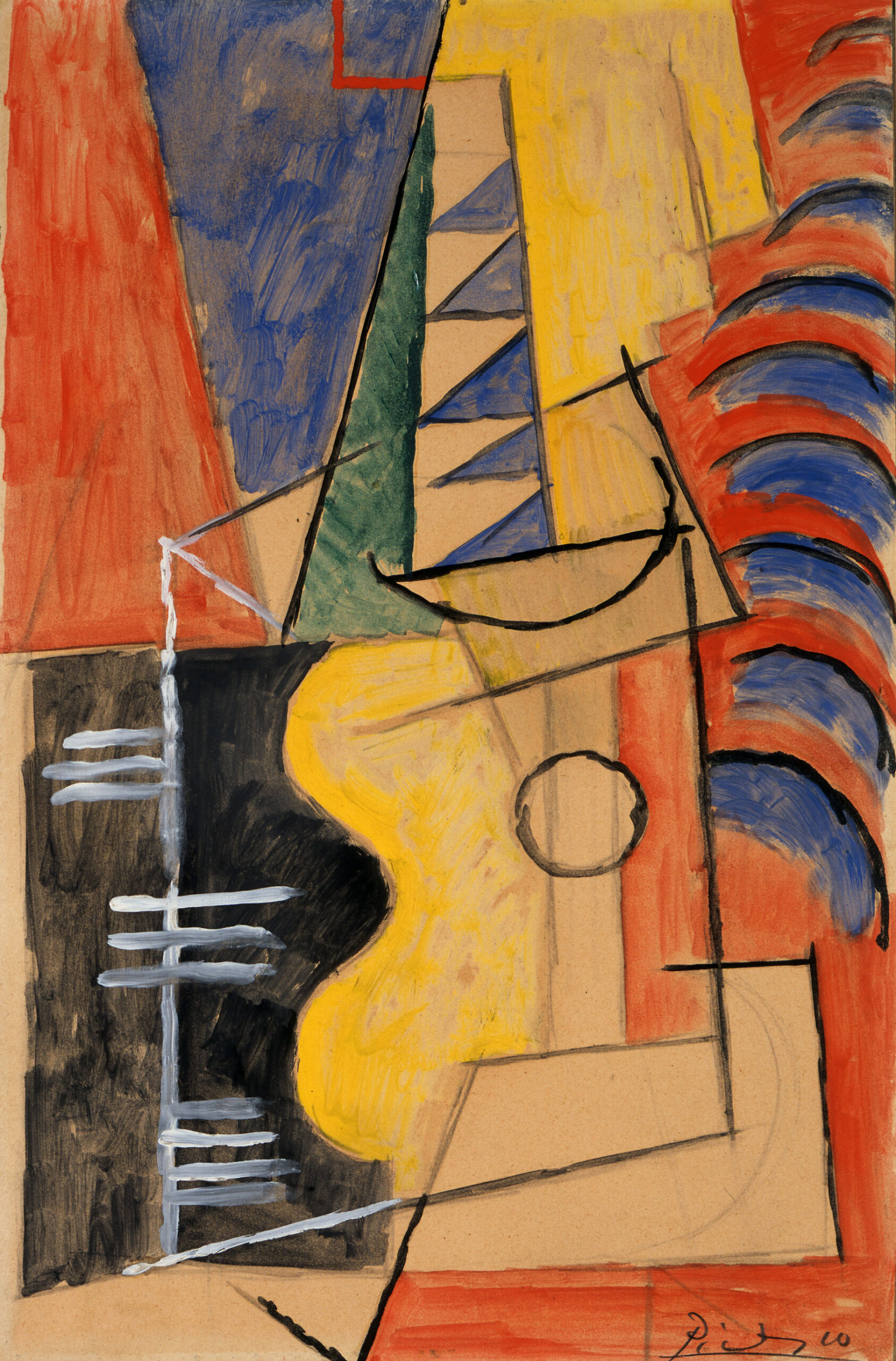 Pablo Picasso, “The Guitar,” 1913
Pablo Picasso is a well-known artist from Spain. He experimented and tried out new ways of making art. His works of art are expressive and show the world in a new way.
One style of art that he is known for is abstraction. This means that the work of art captures an idea instead of just the way something looks. “The Guitar” is abstract.
What does this painting look like to you? Do parts of it look like a guitar? Why do you think Picasso painted some areas of the paper with colors and lines that do not look like a guitar? If you were going to paint an abstract work of art, what would you paint?
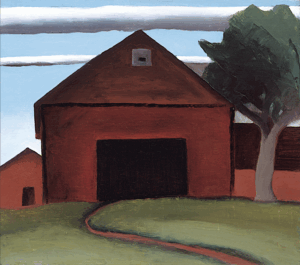 Georgia O’Keeffe, “Red Barn, Lake George, New York,” 1921
Georgia O’Keeffe was an important modern artist. She was the first woman to be accepted into New York’s art world, in the 1920s.
O’Keeffe painted nature and landscapes in a new way. She liked to take lots of time to look at the world and try to understand what she saw and how it made her feel. Her art uses simplified shapes and forms to capture that experience.
Take a look at “Red Barn.” What are some details that you notice? Can you tell what the weather is like in the painting? What season do you think it is?
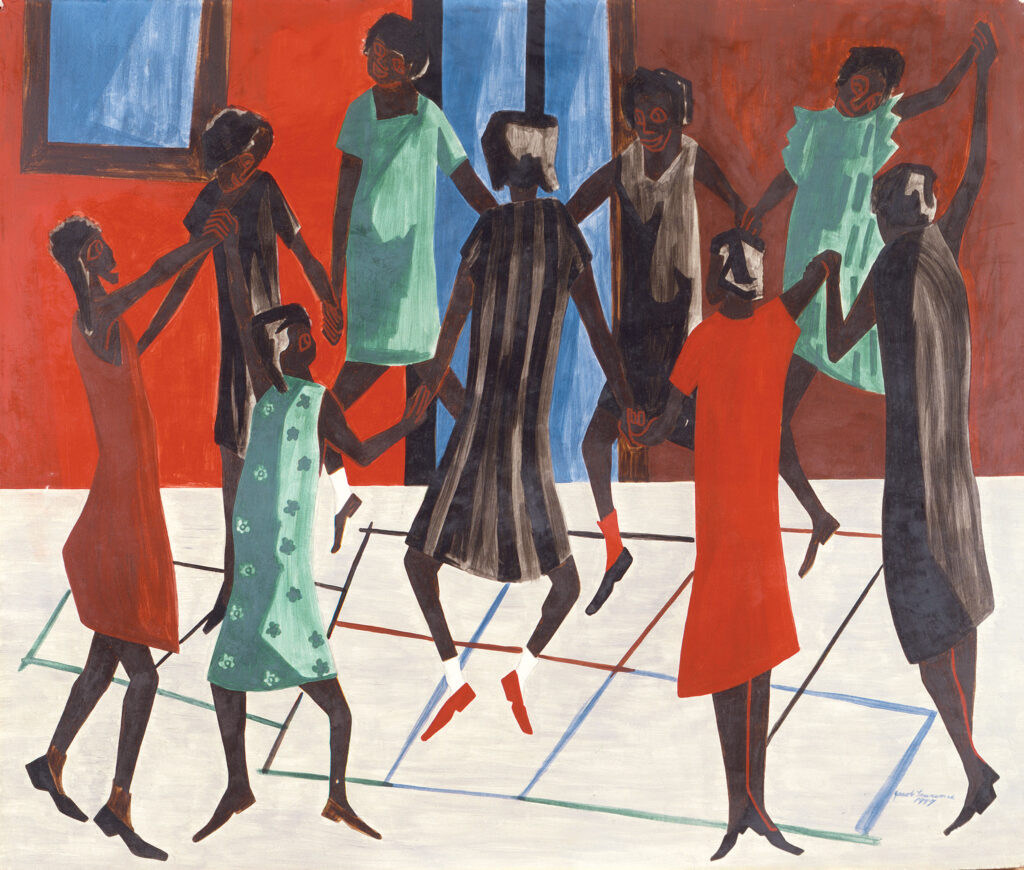 Jacob Lawrence, “Children at Play,” 1947
In 1940 and 1941, Jacob Lawrence completed his series of paintings “The Migration of the Negro.” This series of 60 panels shows African Americans moving north after the end of the Civil War in search of a better life. Lawrence’s parents were among them.
Lawrence’s paintings use vivid colors and expressive lines to bring the African American experience to life. He lived in Harlem in New York and painted everyday scenes from his neighborhood. In “Children at Play” he captures the joy and liveliness of children playing, showing the movement and energy of their body language.
Imagine you are in this painting with the children at play. They are playing in a bustling neighborhood in New York City. What sounds might you hear? What smells might drift through the air?
Share Your Art Near and Far
When Alfred Heber Holbrook retired from being a lawyer, he wanted to start a second career in the arts. He enrolled as an art student at UGA and was friends with Lamar Dodd, who was the head of UGA’s art school. Holbrook shared works of art made by other people, but he also created his own art.
This art activity has two parts.
You will need the following supplies:
- Blank postcards
- Postcard stamps
- Metal posts
- Cardboard poster
- Set of markers
- A pencil

Art That Is Near: Yard Art
- Art is a way for people to express themselves. They paint or draw the things they see around them or ideas that they want to share with other people. What kind of art or message would you like to share with your neighbors?
- Once you have an idea, decide what color you want the background color of your yard art to be. If you want to change the color, glue sheets of paper to the cardboard and let them dry.
- Before you draw with your markers, use a pencil and sketch the basic layout of your poster. This step will help you make sure you can fit everything you want to include.
- Use your markers to create colorful lines, shapes and forms.
- Tape the metal post to the back of your poster and place it in your yard for all to see!
Art That Goes Far: Art Cards
- Decide who you would like to send an art card to.
- Use your markers to create a work of art on the front of the postcard.
- Write a note on the back, address and stamp the card, and mail your art out into the world!
Family Day art kits are sponsored by Heyward Allen Motor Co., Inc., Heyward Allen Toyota and the Friends of the Georgia Museum of Art.