


Our last Family Day focused on sand and surf, good things to think about in the summer. In the Northern Hemisphere, summer is the hottest of the four seasons. What better way to cool off than to go swimming? A popular place to swim and spend a summer day is at the beach.
The sea has been a source of inspiration for thousands of years. Rock carvings in the Gobustan National Park are the earliest known works of sea-related art. They were created by ancient hunter-gatherers between 5,000-20,000 BCE.

Reginald Marsh (American, 1898 – 1954), “Lifeguards,” 1933. Tempera on panel, 35 1/2 × 23 5/8 inches. Georgia Museum of Art, University of Georgia; Eva Underhill Holbrook Memorial Collection of American Art, University purchase. GMOA 1948.205.
Check out this work of art by Reginald Marsh. He was inspired by New York City and used photography to capture all aspects of life there.
This painting is of the beach at Coney Island. Coney Island was first connected to New York City by subway in 1920. It was a popular destination for thousands of people wanting to take a break from the city. Marsh wrote, “I like to go to Coney Island because of the sea, the open air, and the crowds.”
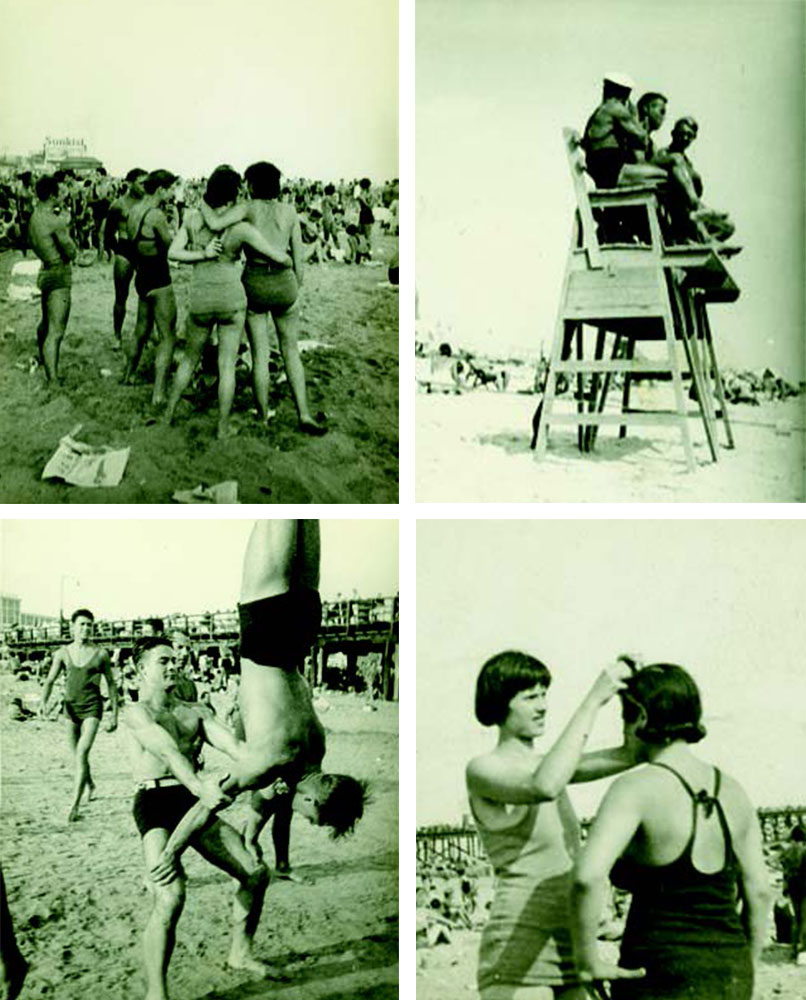
Check out these photographs that Marsh took. Can you find these people in his painting?
Now it is your turn to make sea-inspired art.
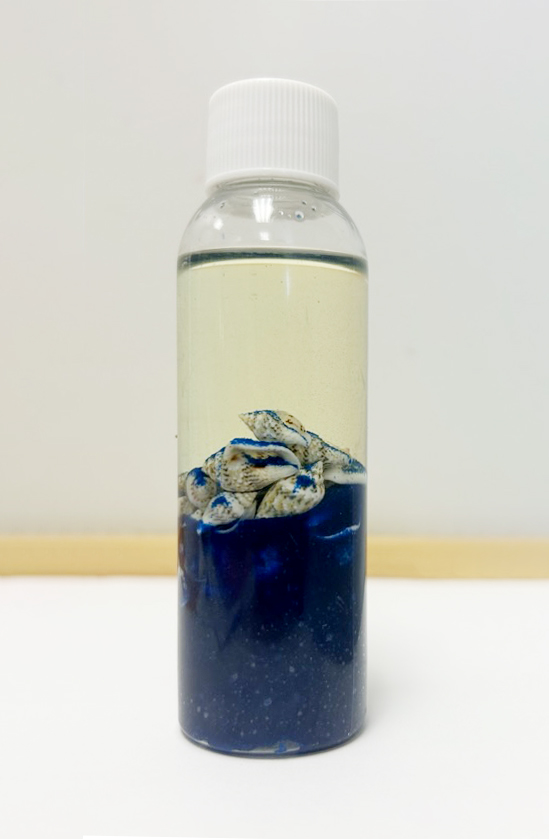
To make your art, you’ll need the following supplies:
- bottle with lid
- colorful sand
- mini seashells
- a small paper cup
- clear cooking oil
- kraft paper or newspaper
To make your sea in a bottle:
- Cover your work area with newspaper or kraft paper for easy clean-up.
- Open the container of colorful sand and pour it into the paper cup.
- Hold the paper cup and gently press the top edges together to form a spout.
- Carefully pick up the paper cup. Tip the end of the creased spout into the bottle to pour the sand inside it.
- Open the container of seashells and drop them on top of the sand in the bottle.
- Pour oil into the paper cup, then carefully squeeze the edges of the cup and pour the oil into the bottle, just as you did with the sand.Put the top on tightly. Now experiment with how the sand, oil and shells move together and separately in the bottle.