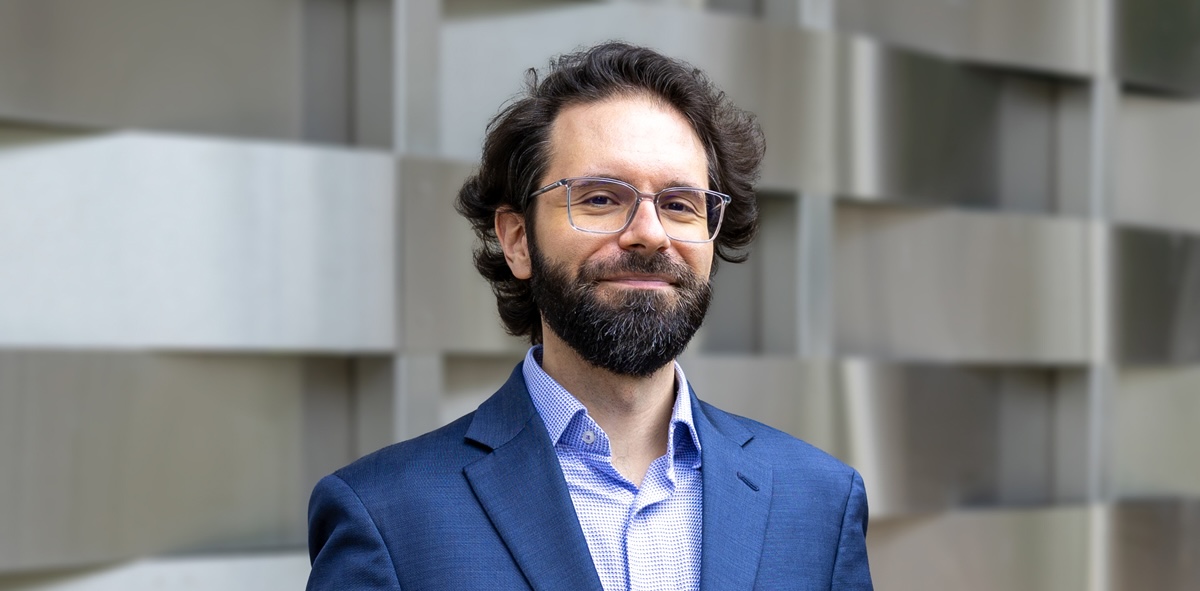
The Georgia Museum of Art welcomed Michael Neumeister as deputy director of curatorial and academic affairs and curator of American art in September 2026.
Neumeister came to the Georgia Museum from his position as senior curator at the Columbia Museum of Art in South Carolina. There, he oversaw approximately 7,000 objects, managed the reinstallation of the permanent collection and organized many exhibitions. He received a master’s degree in art history from the City College of New York, CUNY, and has held previous roles at the Jewish Museum, Whitney Museum of American Art and American Federation of Arts.
Neumeister specifically brings expertise in modern American art to the Georgia Museum’s own extensive collection of American work. His experience as a lecturer also suits him to the museum’s academic environment as part of the University of Georgia (UGA).
Q: What led you to consider working in Athens? What have been your initial impressions of the city?
A: I have long known about the Georgia Museum of Art, primarily because of its collection of American paintings and its excellent track record of exhibitions. It’s a place I’ve always admired. I was especially drawn to the opportunity to work with this collection and to be affiliated with UGA. It is important to me that the museum foregrounds scholarship.
In terms of the city itself, I haven’t been here for very long, but I already appreciate the energy I’m seeing in cultural communities. It feels like there is a generative arts ecosystem here that is actively expanding.
Q: What excites you about your new role?
A: I think the museum is poised to further grow its impact, both within Athens and beyond. I’m heartened to know that more students and classes have been visiting recently. Deepening student engagement is an important goal, alongside continuing the trajectory of significant exhibitions.
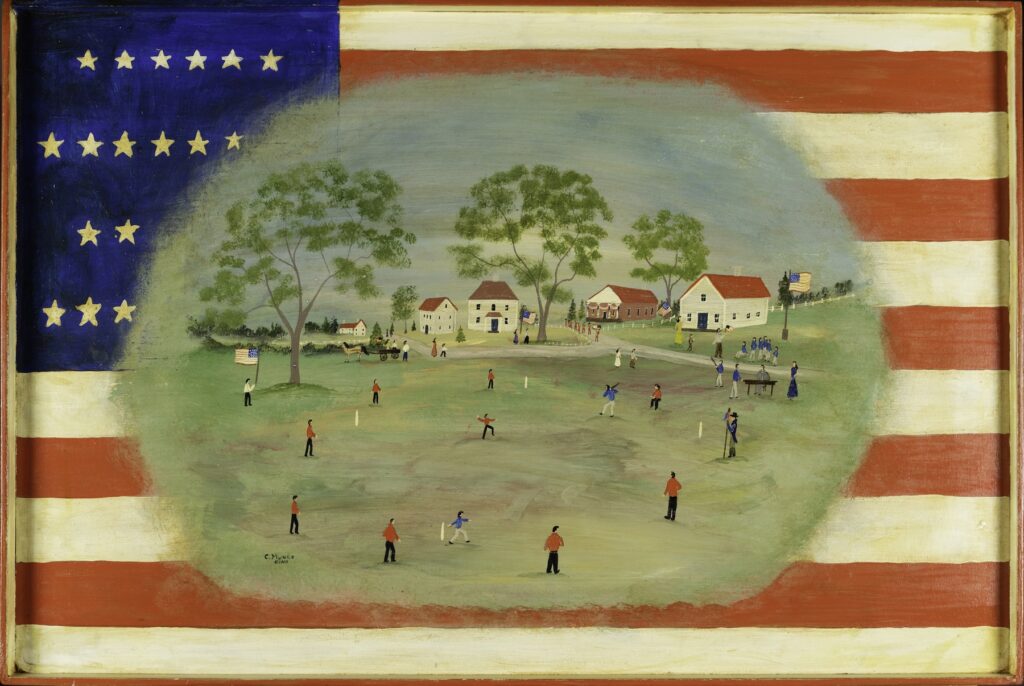
On a personal level, I’m just excited to dive into the museum’s holdings of American art. The founding collection of 100 paintings is very strong. There are great works by Jerome Myers, John Sloan, Marsden Hartley and others.
Q: What period of American art interests you the most? Do you have a particular favorite artist or artwork?
A: I am interested in early American modernism, before abstract expressionism took over the art world. I’m especially drawn to artists who work in inherently interdisciplinary modes. My graduate work was on the painter, poet and scenographer Florine Stettheimer, particularly a ballet that she developed which was never performed. She was friends with [Marcel] Duchamp, Hartley, Carl Van Vechten, the playwright Avery Hopwood and many more. They were sharing ideas and mining sources from across high art and mass culture. It was a rich milieu that warrants continued study.
Q: How did you discover your passion for curatorial work?
A: I came to curatorial work because I was interested in creating exhibitions. Great exhibitions of art can be not only intellectually enriching but rewarding on an experiential level. Then, as I developed in my career, I came to realize that the most important thing we can do as curators is to build and care for a collection. Museums exist to preserve and interpret art for posterity. At the end of the day, our interpretations will inevitably be colored by our times. The greatest challenge for curators is to assess not what is valuable today, but what will be valuable tomorrow.
Q: What has been your favorite exhibition from your past curatorial work?
A: As curators, we’re always building up a knowledge base — not only of art and artists, but of the curatorial process itself and how we can better engage audiences through our work. We come away from every project with some new insight that informs us moving forward. For me, the reinstallation of the collection galleries at the Columbia Museum of Art was perhaps the most enlightening experience. It was certainly the most exhaustive, including around 350 objects spanning diverse collections and media.
Collection installations are distinct from special exhibitions in that they invite a level of soul searching on the part of the institution. We ask different kinds of questions: What do we collect, and why? What does our audience expect to see, and where are the opportunities to surprise them and share something new? That project truly affirmed my belief that a museum’s collection is its core identity, that all things stem from the collection in some way.
Q: Have you worked in a university setting before? Why do you think it’s important for college students to interact with art?
A: I have never worked for a university museum, although I taught art history at my alma mater, the City College of New York. I enjoyed teaching and often found that students from across all disciplines had very thoughtful and perceptive things to say about works of art that they were encountering for the first time.
I believe the analytical skills that students develop in art history are directly transferable to everyday experience. We are bombarded with images constantly, and in art history, you are taught to slow down and visually assess objects with a view toward deeper understanding. It encourages us to look at the world more critically, and to understand the iconography and sources that quietly shape our culture.
Authored by:
Finn McClelion