This past year, the Georgia Museum of Art launched a brand new initiative that puts students in the spotlight. The student guide program gives University of Georgia undergraduate students the chance to lead public tours of the museum’s permanent collection, focusing on a few artworks or objects they personally connect with. These “Student Perspectives” tours are a fresh, student-driven way to experience the museum, and they’re already making a big impact.
The student guide program started in fall 2024, replacing the museum’s student docent program. The goal was to give students more ownership in how the museum connects with the public and to create more opportunities for meaningful campus involvement.
Student guides are paid thanks to a generous gift from Bill Parker, and any first-, second- or third-year student can apply through the museum’s website when applications go live in the summer. The first year’s cohort included students from all over campus, with majors ranging from art history to genetics, Russian, education and studio art.
Students accepted into the program meet weekly throughout the fall and spring semesters under the supervision of Alexis Gorby, the museum’s associate curator of academic and campus engagement. In the fall, they dig into readings on how to structure a themed tour, how to spark conversations with open-ended questions and how to connect their research to real-world audiences. Each student picks four pieces from the museum’s collection that are currently on view in the galleries to focus on by researching and writing short reports. By spring, meetings shift to focus on practicing tours and receiving feedback, covering everything from where to stand in a gallery to how to explain something like cubism in a simple, clear way.
Seven students joined the program in its inaugural year: Brecklyn Rae Brown, Beth Coleman, Jocelyn Kirchen, Caroline Parillo, Chelsea Persad, Natalie Marie Schott and Maribeth Smith. Each participant gave two weekend tours in March and April, and feedback from visitors was incredibly positive. Some guests have said the student-led tours made them more likely to return to the museum. One even responded in a visitor survey that they learned “abstract art doesn’t suck.” Another said that they gained a “greater appreciation of the decorative arts.” The tours seem to be changing how people experience and relate to art, which is the point.
Brecklyn Rae Brown, a social studies education major at UGA’s Mary Frances Early College of Education, joined the program to get more experience in the museum field. “I have taken a few museum studies courses at UGA and am interested in a museum-related career,” she said. “Joining this program was a great way to pursue my interests and get hands-on experience working in a museum setting.”
For her tour, Brown focused on objects that show visible signs of wear and tear, using them to explore how everyday items can tell stories about the past. Her object list included an armchair from the Huger family of Charleston, South Carolina; a turned chair by an unidentified maker from Walton County, Georgia; a baker’s cabinet by Hilliard L. Edwards; and a storage jar by David Drake.
“The theme of my tour is ‘Art’s Wear and Tear,’ and it highlights how objects can tell stories through their usage,” she explained. “I chose four household objects — one with minimal damage and three that show heavy signs of use. I show guests how to look for signs of wear and compare objects throughout the tour because all objects can tell a story.”
Although leading a tour was nerve-wracking at first, Brown said the experience quickly became one of her favorite parts of the program. “I was a little nervous to give my first tour, but also excited to show guests the objects I had been researching,” she said. “My favorite part is hearing the questions that people ask. It’s so interesting to hear what part of an object sparks someone’s interest!”
She also shared that the program helped her grow in all the right ways. “Research skills are important for working in a museum, and I’ve definitely improved there,” she said. “We also had to decide what information was most important for our tours. It was a challenge, but it helped me learn how to communicate more clearly.” Moreover, the public speaking and communication practice has made her more confident when engaging with guests in a professional setting.
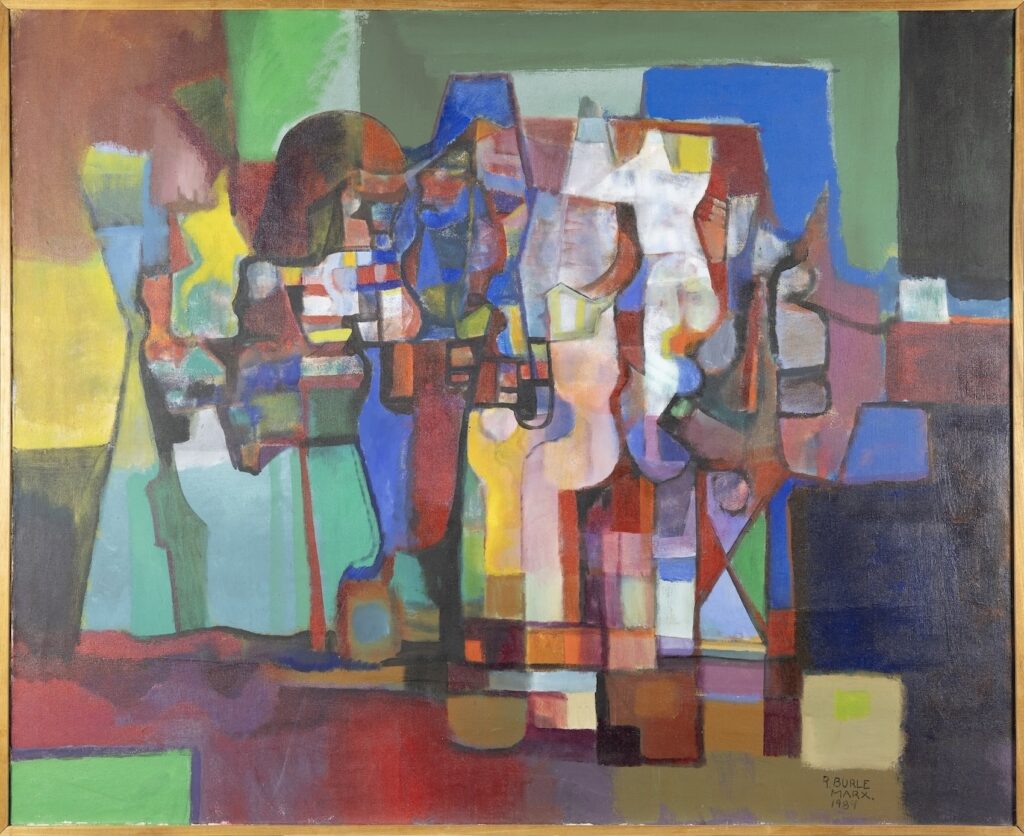
Beth Coleman, a printmaking and book arts major who graduated from UGA’s Lamar Dodd School of Art this past spring, also brought a personal lens to her tour. Coleman focused her tour on abstract paintings by spotlighting Elaine de Kooning’s “Bacchus #81,” Preston Dickinson’s “Cubistic Interior,” Alice Baber’s “Sound of the Red Dance” and Mildred Thompson’s “String Theory IV.”
“I chose four abstract works that represented a range of styles, including cubism, abstract expressionism and color field painting,” Coleman said. “Abstract art has always been close to my heart, both in what I create and what I gravitate toward. I also recognized that abstract art can sometimes feel inaccessible to the general public, so I thought it would be rewarding to offer a bit of context and history to help people connect with it.”
Coleman found her background in hospitality and art education helpful, even before the program’s formal training. “I’ve found that my previous experiences have prepared me in valuable ways,” she explained. “Serving gave me strong interpersonal skills and confidence with the public. My time as an art education major helped me learn how to communicate complex ideas in an accessible way. Those two areas, hospitality and education, have played a huge role in helping me feel comfortable and effective when leading tours.”
Although Coleman still gets a bit nervous right before a tour, she said that leading them has been overwhelmingly positive. “The people I’ve had on my tours have been incredibly respectful, curious and open to learning,” she said. “I’ve learned to center myself before each tour and treat it like a conversation rather than a performance. Once I start, the excitement and joy of sharing what I love about art always takes over.”
The experience has helped Coleman sharpen both her public speaking and research abilities. “The process of preparing for each tour — digging into the history, context and techniques of each artwork — has strengthened my ability to research thoughtfully and synthesize information in a way that’s both engaging and informative. It’s been a great blend of intellectual and interpersonal development,” she said.
Because of the tours, students guides reported feeling more connected to the museum and were more likely to see it as an academic resource. One guide even said the program gave them a sense of community they hadn’t found elsewhere at UGA.
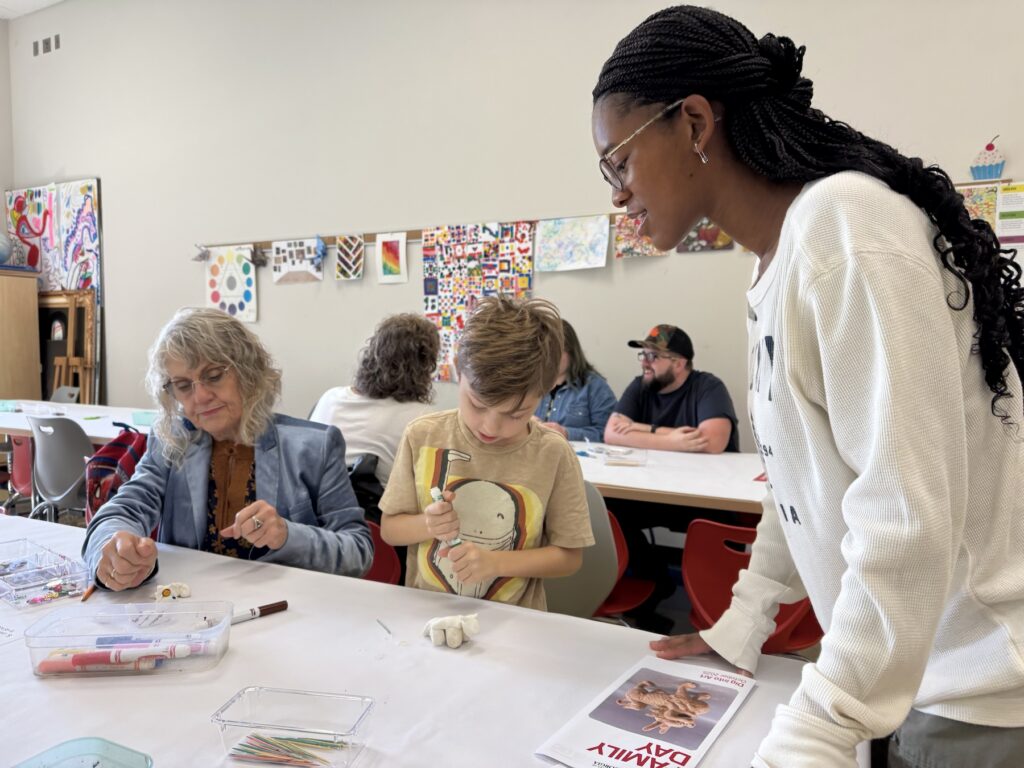
This fall’s new cohort includes 21 first-, second- and third-year students. Collectively representing the sciences, social sciences and the humanities, their academic focuses range from civil and mechanical engineering, political science, art history, risk management, sports science and beyond. This year’s group will play a larger role in representing the museum at various events, such as Student Night, Student Movie Night and Family Day.
The student guide program is more than just a leadership opportunity — it’s a new way for students to tell stories, bring art to life and invite others to see the museum from a fresh perspective.
Authored by:
Rachel Dantes-Palmer