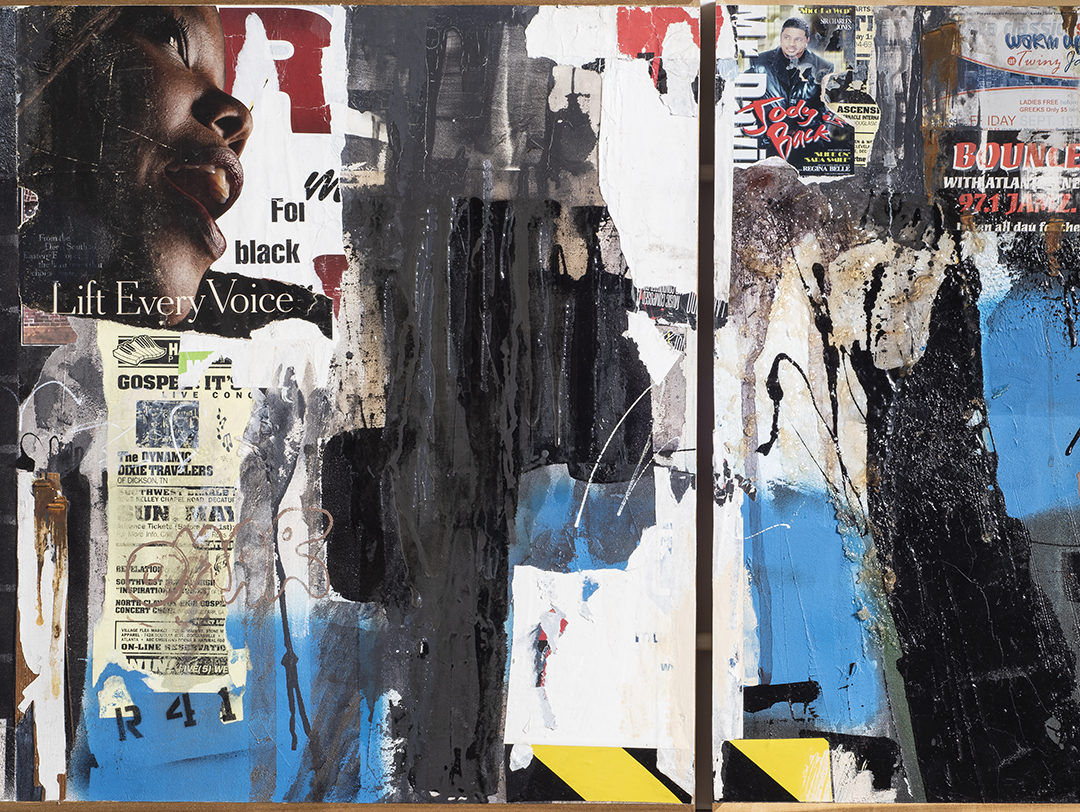
Larry Walker (American, born 1935), detail from “Lift Every Voice,” 2003. Mixed media on two panels, 23 1/2 x 47 3/4 inches. Georgia Museum of Art, University of Georgia; The Larry D. and Brenda A. Thompson Collection of African American Art. GMOA 2020.73. On view in “Inside Look.”
Safety protocols
To ensure a safe and enjoyable experience for all, we continue to encourage masks and social distancing for all visitors, and we have enhanced cleaning and sanitizing procedures in all spaces. We also require free timed tickets, both for general visits and to certain programs with limited capacity. You can read more about our policies and what to expect when visiting on our website(opens in new tab).
Options for class visits
This fall, the museum will offer limited in-person guided tours led by curators and educators, as well as self-guided class visits. We continue to offer virtual tours or curator talks where museum staff “Zoom” in to your classroom. Our education team is more than happy to work with you to determine the best tour format for your group, depending on scheduling, the size of your class and what you’re interested in seeing. Available options for in-person visits and field trips are subject to change as state, university and CDC guidelines change. If you are interested in learning more about how to bring your students to the museum or scheduling a visit, please contact Callan Steinmann, curator of education, at callan@uga.edu(opens in new tab) or 706.583.0111.
Education programs
We continue to offer a robust schedule of education and engagement programs, both virtually and in-person, including Yoga, Morning Mindfulness, artist and curator talks, film screenings and Family Day. Check out our event calendar(opens in new tab) for more info about what’s coming up.
Exhibitions on view this fall
Listed below are exhibitions that will be on view at the Georgia Museum of Art this fall, along with related public programs.
Kota Ezawa: The Crime of Art
On view through December 5
This exhibition will bring together new and recent works related to Ezawa’s “The Crime of Art” series, a group of light-boxes and video animations that chronicle some of the most infamous and high profile museum heists in history. At the heart of this exhibition is a series of images that pays homage to the 13 works — including those by Degas, Manet, Rembrandt and Vermeer — stolen from the Isabella Stewart Gardner Museum in 1990. Ezawa draws from the histories of media, popular culture and art history to create distilled renderings of iconic images. His simplified versions of indelible images remain easily recognizable and potent, the result of a process that illuminates the hold certain images have on their viewers. Working in a range of mediums such as digital animation, slide projections, light boxes, paper cut-outs, collage, print and wood sculptures, Ezawa maintains a keen awareness of how images shape our experience and memory of events. “Kota Ezawa: The Crime of Art” was organized by SITE Santa Fe with the Mead Art Museum. Learn more about this exhibition.
Related Events
- Artist talk by Kota Ezawa: September 7, 5:30 p.m. (free tickets here)
- Film: “Stolen”: September 16, 7 p.m.
- Film: “How to Steal a Million”: September 23, 7 p.m.
- Student Week: The Crime of Art: September 23 – 26, 1 – 5 p.m.
- Film: “Topkapi”: September 30, 7 p.m.
- Lecture: Anthony Amore: “Stealing Rembrandts”: October 14, 5:30 p.m. (free tickets here)
Neo-Abstraction: Celebrating a Gift of Contemporary Art from John and Sara Shlesinger
On view through December 5
At the end of 2019, John and Sara Shlesinger donated 110 works of global contemporary art from their personal collection to the Georgia Museum of Art, transforming the museum’s ability to teach and exhibit cutting-edge art of the past 25 years. This exhibition celebrates their gift by showcasing a selection of works by emerging and established artists from it. “Neo-Abstraction” highlights the resurgence of abstract art among contemporary artists, including an early spin painting by Damien Hirst and a photographic abstraction by Walead Beshty. Their works vary in method. Some employ traditional forms of painterly abstraction. Others use technology to remove bodily gesture from the equation. Still others investigate the boundary between the representational and the abstract. But, for each artist, abstraction offers a way to make visible materiality, process, expression and chance. As a result, their works bring us as viewers back to a real, physical and emotional encounter with the objecthood of our world.
Related Events
- Artful Conversation on on Mika Tajima’s “At the Door”: August 18, 2 p.m.
- Artist talk: Daniel Hesidence, November 4, 5:30 p.m.
- Student Night: November 4, 6:30 – 8:30 p.m.
- Artful Conversation on Sarah Braman’s “Coexist”: November 17, 2 p.m.
In Dialogue: Artist, Mentor, Friend: Ronald Lockett and Thornton Dial Sr.
On view through November 28
During their lifetimes, Thornton Dial Sr. (1928 – 2016) and Ronald Lockett (1965 – 1998) were artistic contemporaries who produced rich bodies of work that transformed discarded materials into objects of wonder and complexity. Their deep friendship was forged through both bonds of family, friendship and visual expression. This comparison of works by them from the permanent collection places the two artists in conversation with one another, highlighting their creativity and their mutual exchange of knowledge and experience.
“In Dialogue” is a series of installations in which the Georgia Museum of Art’s curators create focused, innovative conversations around a single work of art from the permanent collection. The series brings these familiar works to life by placing them in dialogue with works of art by influential peers, related sketches and studies or even objects from later periods.
Related Events
- Zoom curator talk by Shawnya Harris: September 1, 2 p.m. (register here)
Whitman, Alabama
On view through December 12
“I celebrate myself, and sing myself, And what I assume you shall assume, For every atom belonging to me as good belongs to you.”
So begins “Song of Myself,” one of American poet Walt Whitman’s most famous poems. Originally published in 1855 as part of his work “Leaves of Grass,” the poem is a joyful celebration of the diversity of America and a meditation on our connectedness to one another. “Whitman, Alabama,” an ongoing documentary project by filmmaker Jennifer Crandall, brings Whitman’s words to life through the voices of modern-day Alabama residents.
For two years, Crandall traveled through the state, inviting everyday people to recite verses from Whitman’s poem on camera. The outcome is a collection of captivating portraits, and a compelling reflection on American and southern identity. As the people in “Whitman, Alabama” recite lines of Whitman’s poem, they also share intimate glimpses of their lives on video. The juxtaposition of poetry against the backdrop of everyday, human experiences — sitting with family on front steps, doing chores around a farm, attending football practice — results in a series of videos that are both unexpected and mesmerizing. Crandall, who previously worked for the Washington Post as a video producer and journalist, began working on “Whitman, Alabama” while she was artist in residence for the Alabama Media Group. She said, “I came up with the idea of making a series of portraits hoping to show off Alabama’s people – but instead of using a traditional interview format, I wanted to use a poem as the common thread. And beyond that, let people speak for themselves.” This exhibition will feature 23 of the 52 (so far) films.
To learn more about the project, visit www.whitmanalabama.com.
Related Programs
- Panel discussion with the filmmaker: November 28, 5:30 p.m.
Modernism Foretold: The Nadler Collection of Late Antique Art from Egypt
On view through September 26
This extraordinary assembly of objects dating from the 3rd to the 8th century CE belongs to Emanuel and Anna Nadler of New York City and Palm Beach. The Nadler family has long been one of the most important collectors of Coptic art. Emanuel’s father, Maurice Nadler (1885–1941), a prominent industrialist from Alexandria who made art acquisitions in Egypt and Germany, originally put this collection together between 1920 and 1941. Coptic art was made by and for native Egyptians, Greeks and Romans who favored both classical pagan and Christian themes.
On display are 56 objects, among them a marble Corinthian capital with crosses and eagles from the Monastery of St. Menas; two sections of large tapestries used as wall hangings in churches or homes; small textile fragments which originally embellished tunics used in burials; 19 works of sculpture derived from funerary sites; and miniature bone carvings that were embedded into pieces of furniture, bridal caskets and small chests for storing jewelry and other precious items.
“Modernism Foretold” draws attention to the history of the collection and to changing perceptions of late antique art from Egypt. In 1966, 116 late antique works from the collection were introduced to American audiences in an exhibition titled “Six Centuries of Coptic Art,” mounted at the Gallery of Modern Art, New York City. That exhibition presented the work as viewed through a specific modernist prism, reflecting the idea that non-illusionistic art expressed intellectual and spiritual substance. Throughout the 1960s, the collection became an integral part of a campaign of cultural diplomacy during a pivotal period in the Cold War, following the nationalization of the Suez Canal. The Nadlers’ works played a salient role in a campaign in which prominent philanthropists joined UNESCO’s efforts to save the ancient Egyptian temples at Abu Simbel, the site of which was to be submerged by the Aswan High Dam.
Related Videos
Inside Look: Selected Acquisitions from the Georgia Museum of Art
September 18 – January 30
With more than 18,000 objects in its collection, the museum cannot show everything all the time. This exhibition features many previously unseen works of art, including new gifts and purchases across our curatorial departments that have filled critical gaps in the permanent collections. Visitors will discover examples from the Femfolio portfolio, featuring prints by artists such as Faith Ringgold and Miriam Schapiro; a suite of abstract prints by Sophie Taeuber-Arp; selections from the John and Sara Shlesinger Collection of contemporary art; Russian portraits from the Belosselsky-Belozersky family; important abstract and self-taught objects by African American artists; photographs of celebrity culture and everyday life in 1960s England by Lewis Morley; and scenes of the resilient communities of Appalachia by photographers Milton Rogovin and Arthur Tress.
Related Events
- Curator talk by Asen Kirin: October 6, 2 p.m.
- Artful Conversation on Femfolio: October 20, 2 p.m.
- Curator talk by Shawnya Harris: December 1, 2 p.m.
- Artful Conversation on Arthur Tress: December 15, 2 p.m.
Collective Impressions: Modern Native American Printmakers
October 16 – January 30
This exhibition examines the individuals, communities and institutions central to elevating printmaking as a medium among Native American artists during the second half of the 20th century. As a nontraditional art form among Indigenous artists, printmaking has continually offered a dynamic means of modernist experimentation, communal engagement and social commentary. The exhibition provides an overview of this history, while also considering concepts like ritual, gender, humor, power, memory and dispossession and exile. Such themes are especially well suited to this paper-based medium. As Choctaw/Chickasaw art historian heather ahtone notes, Native printmakers took up paper — the material that Western legal culture used to dispossess tribes of rights, lands and languages — as a means of survivance, sustaining native stories and renouncing narratives of domination or tragedy.
“Collective Impressions” features an influential group of Indigenous artists, from some of the earliest to engage with the medium, like Awa Tsireh and Gerald Nailor, to a group of more humorous and satirical artists, like Fritz Scholder, T.C. Cannon and Jaune Quick-to-See Smith. The exhibition also highlights a large number of Cherokee, Muscogee (Creek) and Yuchi artists, including Bobby C. Martin, America Meredith, Kay WalkingStick and Richard Ray Whitman, whose works address history, memory and belonging. These are crucial questions for the Georgia Museum of Art, given that our university and museum stand on the ancestral homelands of these tribes.
Related Events
- American Indian Returnings Lecture: Phillip Carroll Morgan: September 23, 4:30 p.m. (register for free tickets)
- Prints and Poetry: Native American Art and Literature at the Georgia Museum of Art: November 11, 5:30 p.m.
Contemporary Japanese Ceramics from the Horvitz Collection
On view through September 2022
Japan has had a thriving ceramic culture for over 15,000 years, often focused on utilitarian (or practical) objects. In 1948, the avant-garde ceramic group Sodeisha (“Crawling through Mud Association”) challenged the tradition of functional pottery. Instead, its members advocated for the creation of sculptural ceramic objects. They preferred form over function.
The Sodeisha artists were not well known outside the country until the 1980s. Nonetheless, their vision of creative explorations using clay determined the future. Today, Japan boasts one of the most robust contemporary ceramic scenes in the world.
This exhibition presents Japanese pottery and porcelain created by three generations of master ceramic artists. Made with both ancient and modern materials and methods, their works are exceptionally diverse. They share the outstanding craftsmanship and sophisticated design characteristic of Japanese contemporary ceramics.
All works in the exhibition come from the collection of Carol and Jeffrey Horvitz.
Power and Piety in 17th-Century Spanish Art
On view through November 2022
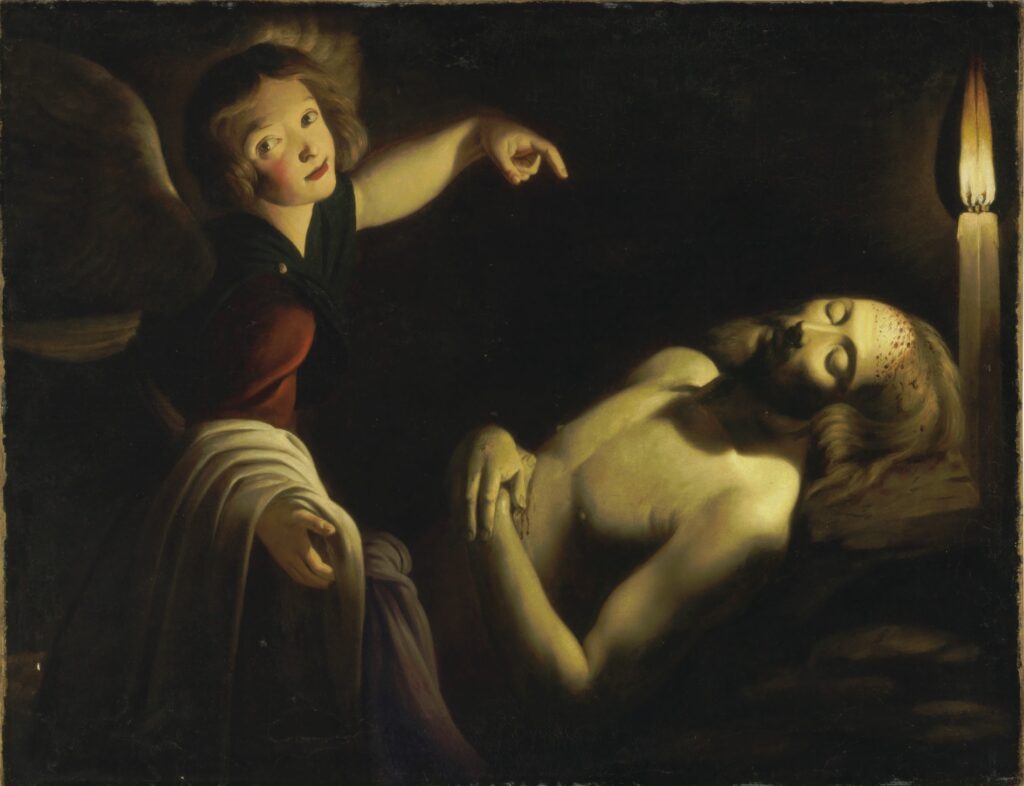
This exhibition is part of a continued collaboration between the Georgia Museum of Art and Bob Jones University Museum and Gallery in Greenville, South Carolina, and provides visitors with the opportunity to see works by premiere Spanish baroque painters such as Francisco de Zurbaran, Bartolome Murillo, Pedro Orrente and others. Viewers will be immersed in a selection of paintings that uphold the tenants of Catholic Counter-Reformation Art illustrative of the struggle between the Catholic church and the rise of the Protestant Reformation in Europe, which dominated the art scene in 17th-century Spain.
Related Videos
Authored by:
Callan Steinmann