The Arctic is not empty. It remembers. Through archival film, animation and Inuit knowledge, asinnajaq offers a powerful meditation on land, memory and cultural continuity.
This August, the Georgia Museum of Art will present work by artist asinnajaq in its Alonzo and Vallye Dudley Gallery. A visual artist, filmmaker and writer, asinnajaq (pronounced “uh-SIN-ee-ack”) invites viewers to slow down and reconsider what they think they know — about land, history and Inuit communities.
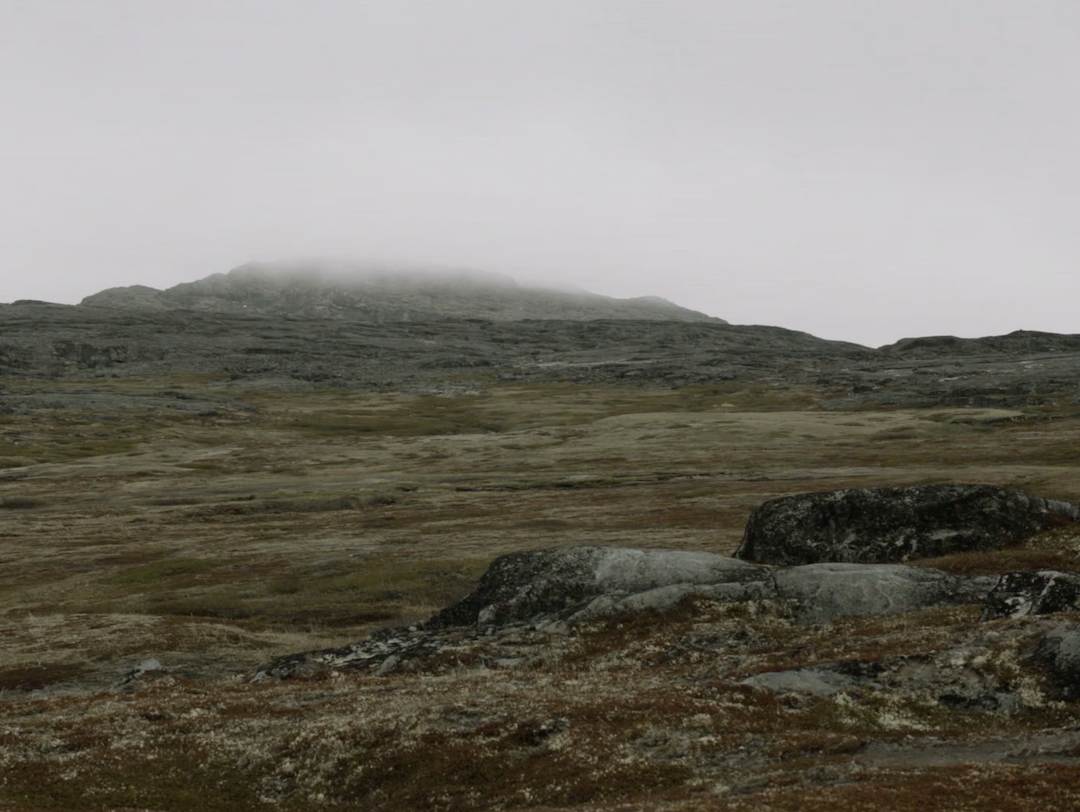
Born in Inukjuak, a coastal village in Nunavik (Québec), asinnajaq grounds her work in Inuit knowledge systems, intergenerational care and a deep relationship with the land. Now based in Montréal, she explores identity while challenging dominant narratives that misrepresent the Arctic and its people. Her video and photographic works capture the quiet richness of the northern landscape, where mosses, lichens, grasses and shrubs reemerge every year after the long winters.
Beyond her artistic practice, asinnajaq is a leading curator of Inuit art and film. In 2024, she curated “ᐆᒻᒪᖁᑎᒃ uummaqutik: essence of life” at the Montreal Museum of Fine Arts. She also co-curated “INUA,” the inaugural exhibition of Qaumajuq (Winnipeg Art Gallery’s Inuit art center), and contributed to the Canadian Pavilion at the 2019 Venice Biennale. As co-creator of Tillitarniit, a three-day festival celebrating Inuit art and artists, she plays an active role in fostering community and cultural visibility. In 2020, she received the Sobey Art Award for her contributions to contemporary art.
Her acclaimed short film “Three Thousand” (2017) will be on display at the Georgia Museum starting August 9. This 14-minute documentary blends archival footage, contemporary video and original animation, all intertwined with the sounds of the northern landscape, Inuit life, classical music and throat singing.
“Three Thousand” reimagines the past and future of Inuit life. It weaves together thousands of hours of archival footage from the National Film Board of Canada — ranging from 1950s government-sponsored films to recent works by Inuit filmmakers — to present a dynamic portrait of Inuit communities. Scenes of family life, education, industry, tradition and northern landscapes unfold in sequence, revealing the connection between humans and nature as well as the intergenerational bonds that sustain culture and memory.
A cluster of lichens becomes a visual metaphor for resilience and continuity. Designed to play in a loop, the film distorts linear time and prompts viewers to rethink how stories are documented and how they shape our understanding of Indigenous futures and the concept of progress.
“Three Thousand” has garnered international recognition, including the Best Indigenous Short Film at the 2018 Skábmagovat Film Festival in Inari, Finland, and a nomination for Best Short Documentary at the Canadian Screen Awards.
This exhibition is an invitation to reflect, reframe and reimagine. Experience “Three Thousand” and explore the powerful visual storytelling of asinnajaq — where past, present and future coexist, and where care and collaboration open new ways of seeing the world.
“It is an honor to bring asinnajaq’s thoughtful storytelling practice to the audiences of the Georgia Museum of Art and the broader university and Georgia communities,” says Kathryn Hill, associate curator of modern and contemporary art.
In 2020, the museum acquired a portrait of asinnajaq by Kent Monkman, a member of the Fisher River Cree Nation, from his “Shining Stars” series that recognizes Indigenous figures he admires: artists, activists, culture bearers and community leaders. Monkman first met asinnajaq after she received the Kent Monkman Award for Best Experimental Work at imagineNATIVE for “Three Thousand.” Currently on view in the museum’s “We the People: Portraits and Identity” gallery, the portrait presents a new perspective of power and influence in a contemporary time.
“Monkman’s portrait of asinnajaq illustrates the importance of a figure who contributes to their community, who creates art and cares deeply for the environment, and who uplifts stories, histories and narratives that historically have been under represented in museum spaces. As a curator, artist and storyteller, asinnajaq steps forward as a leader in our field,” says Hill. “We are delighted to support both artists as they uplift each other up and others in their communities to create more collaborative and supportive art networks.”
Authored by:
Jeehyung Pyo