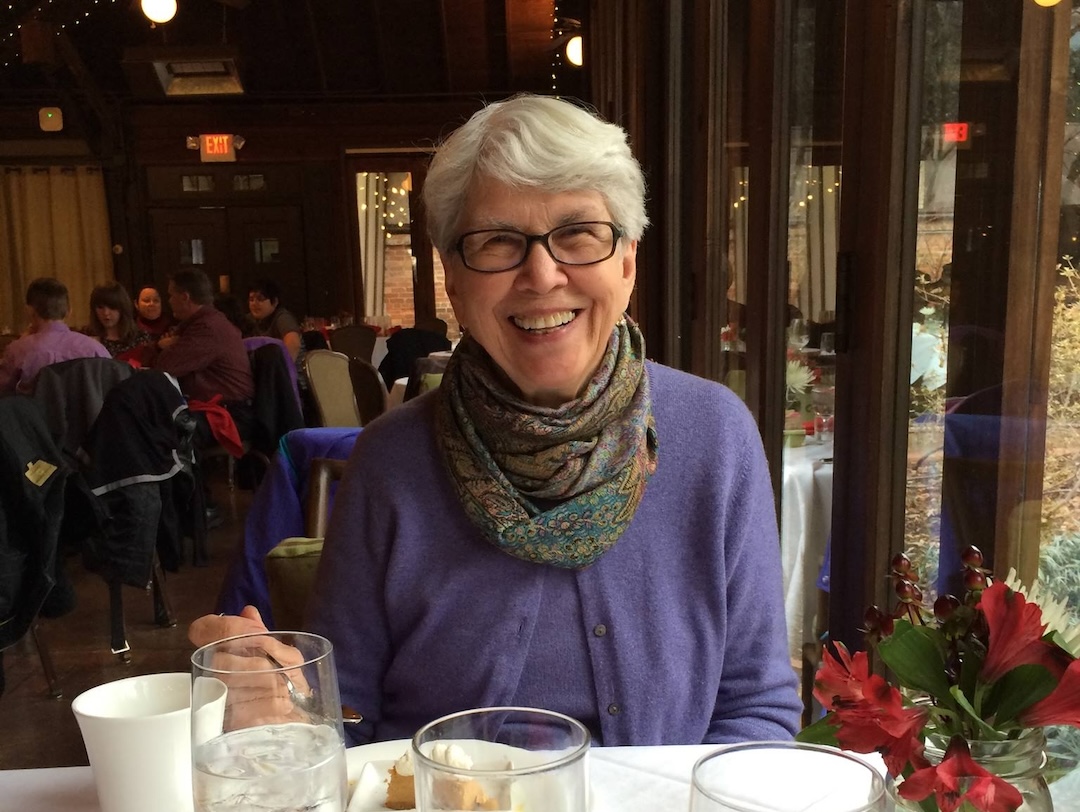
The Georgia Museum of Art has grown into a respected institution, with its early days in part shaped by a dedicated group of volunteers eager to bring art to the community. One of those pioneers was Priscilla Golley, who played a significant role in the formation of the museum’s docent program and volunteered from the late 1950s to late 1970s. She recently shared her memories of how the program began, the people who made it possible and how the museum has evolved over the years.
Golley recalls that the museum was originally housed on North Campus, making it easily accessible to visitors. “A lot of people stopped in,” she recalled. At the time, the Athens Art Association, composed largely of University of Georgia faculty members, played a significant role in the museum’s early activities. When William D. “Bill” Paul Jr. took over as the museum’s director, in 1969, he sought to expand its outreach and education efforts.
The docent program took root in the home of a museum supporter, where a small group gathered to lay the foundation for guided tours. Seeking guidance, they connected with the Organization for Museum Directors, and Paul encouraged two volunteers to travel to North Carolina to learn from an established program in Raleigh.
Upon their return, they made it known that the program was taking shape, attracting many volunteers who committed to a month of weekly training sessions. These sessions covered the museum’s collection and prepared them to give tours. The museum’s basement gallery hosted revolving exhibitions, which were well received by schools. Smaller tour groups allowed students to engage more deeply, with 8th and 9th graders making up the largest audience.
The volunteers came from diverse backgrounds. “Half of the group had art degrees, and many were members of the Athens Art Association or the University Women’s Club,” Golley said. With the university’s student population not as large as today, the museum remained closely tied to the community. Word of mouth quickly expanded the docent program from eight to 30 volunteers. “People were really interested in the museum. Everyone wanted it to be successful and for the community to engage with it,” she recalled.
Social events also played a role in community engagement. “We developed friendships, and our first big party was in the museum. We had oysters that we were shucking — it was lively! People were interested in art, and no one felt intimidated.” The museum was a hub of activity, reflecting a period of growth for Athens and UGA. With a new library and expansions in science and anthropology buildings, the campus was developing rapidly.
One of the key figures in shaping the museum’s collection was its founder, Alfred Heber Holbrook, a retired lawyer. “He wasn’t an academic, but he was determined to get a painting from every living artist at the time,” Golley said. He had a strong interest in the Hudson River Valley school and worked to ensure the museum reflected the artistic movements of its era.
For Golley, the museum was more than just a place to work; it was a place of learning and connection. “I took my children there often. It was somewhere you could take preschoolers, and they could take pictures. It was a busy place, always three or four people around. You could sit on the floor and copy paintings — it was a nice situation.”
Reflecting on changes over time, Golley noted that the early years of the museum coincided with major social and economic shifts. The museum opened in 1948, less than a decade after the end of the Great Depression. “During the Great Depression, it was difficult for anyone to have a job. At land-grant colleges, only one person per family could be employed. That left a lot of educated spouses around who volunteered, making the docent program possible.”
Looking back, Golley describes those early days with warmth and appreciation. “It was an interesting time, and it was fun. People enjoyed it, and it became a thing. We were part of something special.”
Thanks to the passion and dedication of volunteers like Golley, the Georgia Museum of Art’s docent program flourished and set the foundation for the museum’s continued success. While much has changed over the years, the museum remains a testament to the power of community involvement and the enduring love for art.
The museum’s community docent program is still going strong today. The current group of about 25 dedicated volunteers share their love of art with public and K-12 audiences through interactive, engaging gallery tours that prioritize visitor engagement and personal meaning making. To learn more about the program and how to apply, visit the Docents page.
Authored by:
Nishat Nayla