What do museums do when they are given a collection of works and lack an in-house curator who specializes in that area of art? Sometimes they’re able to make do, but sometimes they need to solicit outside help.
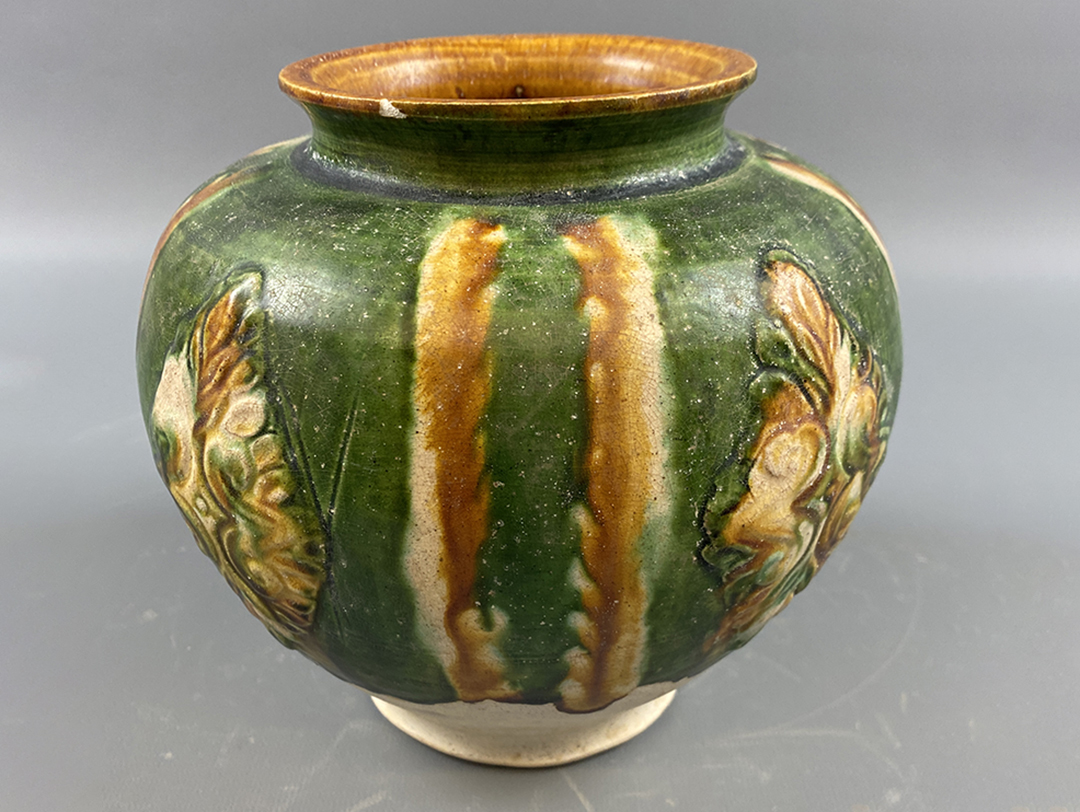
When the Georgia Museum of Art received a large gift of Chinese ceramics from D. Jack Sawyer Jr. and William E. Torres, it asked UGA alum Kendal Parker (AB ’98; MA ’01), an expert in Asian art, to assess this extensive collection. Parker spent the summer of 2022 in the vaults, carefully examining each object. She also went above and beyond her contracted duties and suggested several installations. The results of her work are now on display in one of the wall cases in the permanent collection.
It wasn’t Parker’s first experience with working at the museum. Back in 1997, when she was Kendal Korach, she interned in the registrars’ department. Later, she also served as a curatorial intern while working on her master’s degree in art history at UGA and organized the exhibition “Art for the Afterlife: Chinese Funerary Art of the Han Dynasty” (2000).
Parker went on to work at the Ackland Art Museum at the University of North Carolina-Chapel Hill as assistant curator and later as a consultant; at the Metropolitan Museum of Art in the department of Asian art; as programs coordinator at the Japanese Art Society of America; and at Leland Little Auction & Estate as director of its Asian art department. In 2020, she founded her own company, Kendal Parker Art Advisory, that offers assessment, cataloguing and curatorial services to private art collection owners, galleries and museums. She also spent seven years living in Hong Kong and Singapore, where she furthered her expertise in Asian art before returning to North Carolina to raise her three sons.
During the Han dynasty, from 206 B.C.E. to 220 C.E., ceramics were often made to store grain or wine in a tomb for the deceased to enjoy in the afterlife, a topic that Parker’s first exhibition at the museum addressed. During the Song dynasty, from 960 to 1279 C.E., ceramics were important for their artistic merit. The Qing dynasty, from 1636 to 1912 C.E., was also the last imperial dynasty in Chinese history, and its ceramics often show Western cultural influences, as trade with the West vastly increased during this time period and there was a large export market for Chinese porcelain in Europe and the United States.
“It has been my sincere pleasure to work with the Asian art collection again at my alma mater,” said Parker. “The Georgia Museum of Art is so fortunate to have an encyclopedic collection of Asian art from the countries of China, Japan, India and Southeast Asia. I am thrilled that a selection from the generous gift of Chinese art from Jack Sawyer Jr. and William Torres is now on view in the permanent galleries for the students and community to learn from and enjoy.”
Authored by:
Hillary Brown