

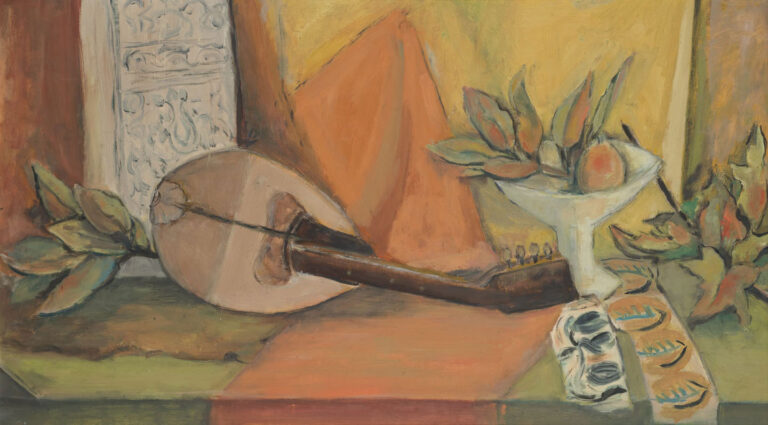
Our last Family Day focused on the exhibition “Southern/Modern.” This exhibition shows art created in the southern United States during the first half of the 20th century. By uncovering overlooked stories, it highlights the range of styles of art made by artists in the region, especially women and artists of color.
Between 1900 and 1950, lots of important things happened in the world. There were new inventions, cities got bigger, and people started thinking in new ways. Modernism was a cultural movement during this time that changed art, literature and music. Modernism rejected tradition. This exhibition shows how artists experimented with new styles of art in this time period.
Abstraction is one form of modern art. Abstract art doesn’t show recognizable things like people, places or objects. Instead, artists use color, shapes and lines to create a new kind of art.
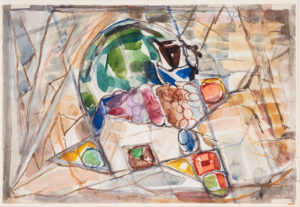
Check out these two examples of still-life paintings from the exhibition. A still life is a kind of art that shows a group of objects in an arrangement, such as cut flowers, vases or food.
Can you find elements of abstraction in each of these paintings? What colors, shapes and lines do the artists use to show the objects?
Now it is your turn to create your own abstract still life, using a technique called blind contour drawing.

To make your work of art, you will need the following supplies:
- Paper
- Colored pencils or other drawing supplies
- Objects from home to create your still life
Blind contour drawing is a special way of drawing where you don’t look at your paper while you draw. Instead, you look at what you’re drawing and pretend that your pen or pencil is touching the edges of the objects as you draw.

- Choose 3 to 5 interesting objects from around your house for your still life. Cups or bowls, vases, flowers, fruit, stuffed animals, seashells or toys are all great choices — it’s up to you!
- Place the objects together in a group. Think about how you want them arranged to create interest for your drawing.
- Draw what you see when you look at your arrangement of things, using the blind contour drawing technique. It’s okay if your drawing looks a little funny or messy.
- Place the tip of a colored pencil on the paper. Look at your arrangement. Choose one of the objects you see. Look at the object carefully and start tracing its outline without lifting your pencil off the paper. Remember not to look at your paper; keep your eyes on the object.
- Go very slowly and carefully, following every curve and detail you see. Imagine that your colored pencil is touching the surface of the object as you draw. Don’t worry if your lines aren’t perfect or if you accidentally go off the paper!
- Once you finish drawing the first object, repeat with another one. Again, don’t look at your paper while you draw. Try your best to capture the shapes and details of each object.
- After you’ve drawn all the objects you chose, it’s time to see what your blind contour drawing looks like. You’ll probably notice that your drawing looks a bit unusual and doesn’t exactly match the objects, but that’s okay. Blind contour drawings are all about exploring and having fun with lines.
- Now use colored pencils, markers or crayons to add color to your drawing. You can fill in each section or shape with different colors, creating an abstract representation of your still life. Feel free to experiment with bold and vibrant colors.